".$title.""); ?>

Wednesday, September 17, 2008

Summer Kitchen

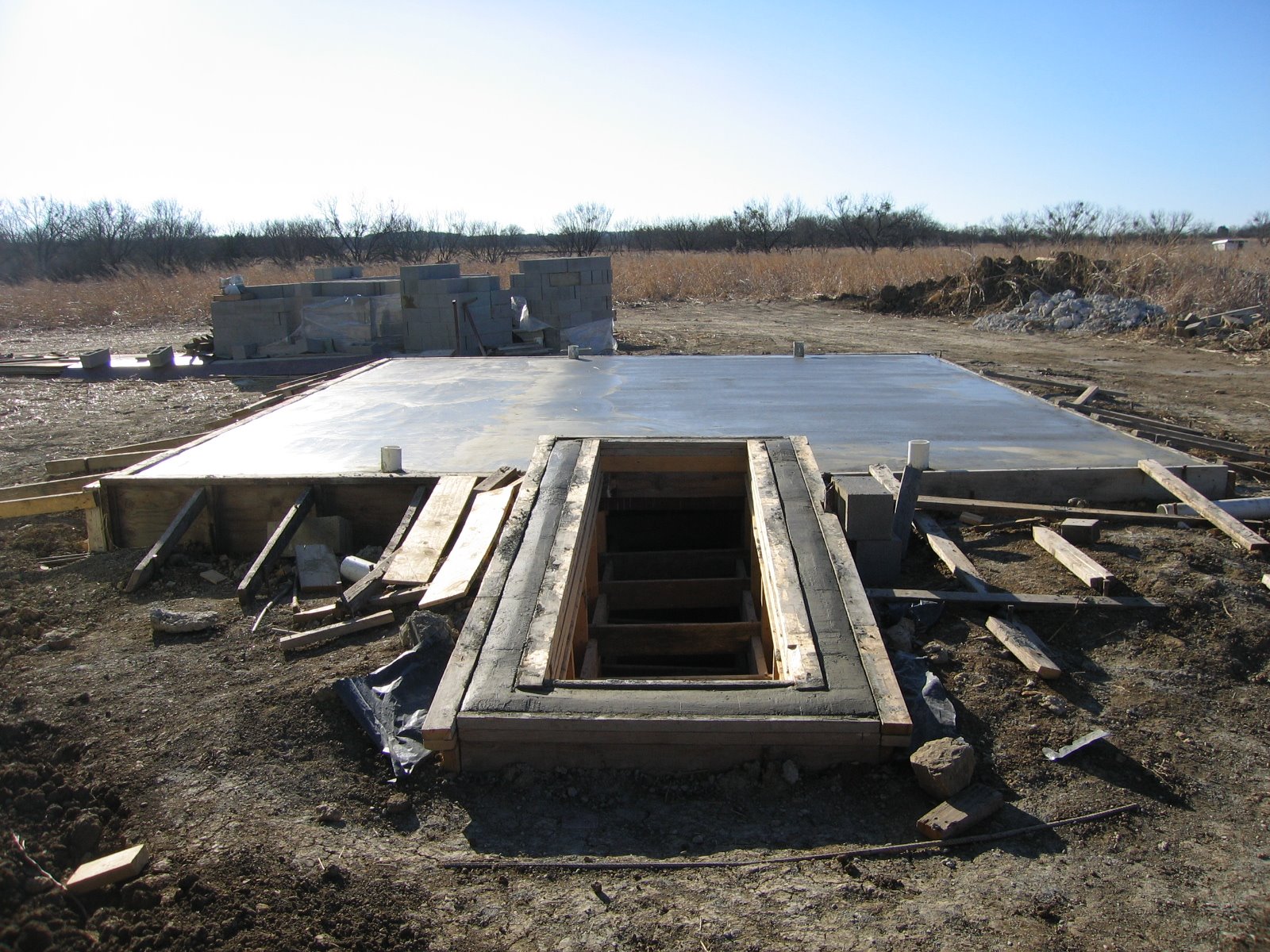
The original plan for the root cellar was to have a concrete slab on top, which would allow for the constructing of a building on top of it, thus creating a rather large insulation space to help keep the root cellar cool (plain air space is apparently a good insulator). We decided (at least at this point) to make this building a summer kitchen, allowing Sue and any of the women in the community who might want to use it, to cook and can the Lord's provisions in a hopefully ventilated and cooler environment and to not heat up their own houses. And so, the design was to have the north half be the kitchen; the south west quarter be a pantry for the kitchen; and because I would like to have a place to take up the piano again, I thought I'd make the south east corner a piano room.

This is personally my first real building project. While this is still a work in progress, here is a little tour of where it is today and the process by which we got there.

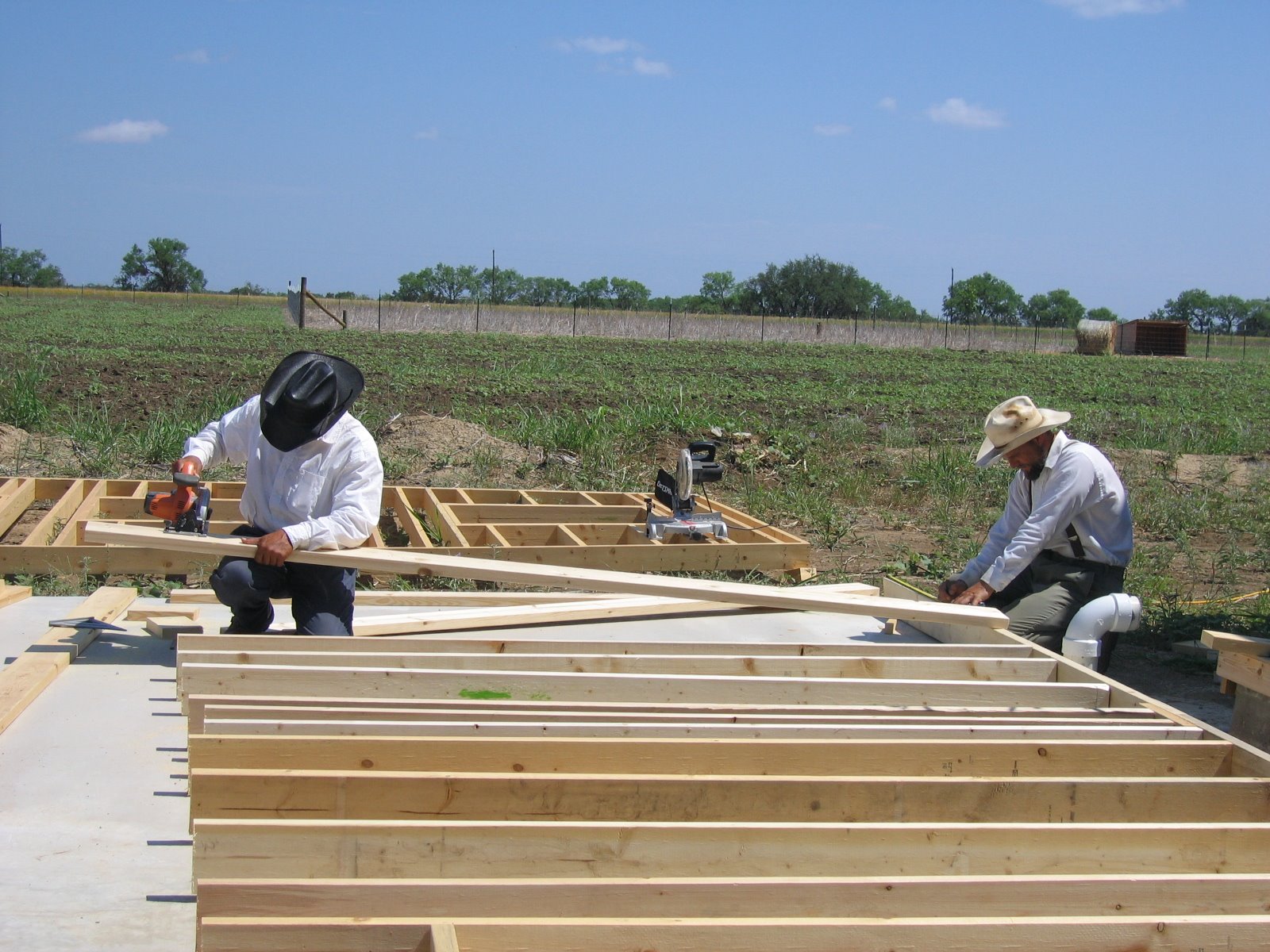
Building the walls:
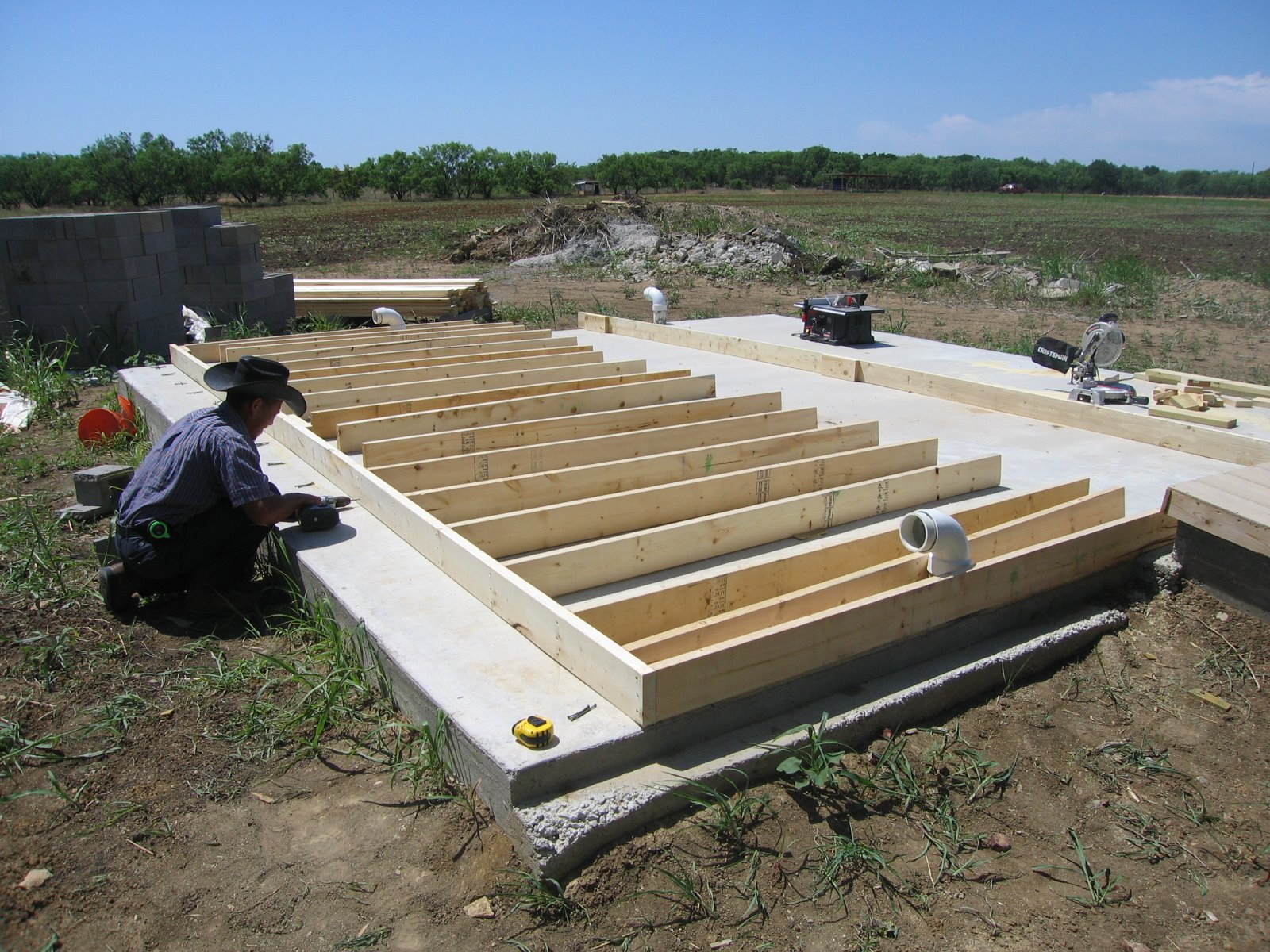


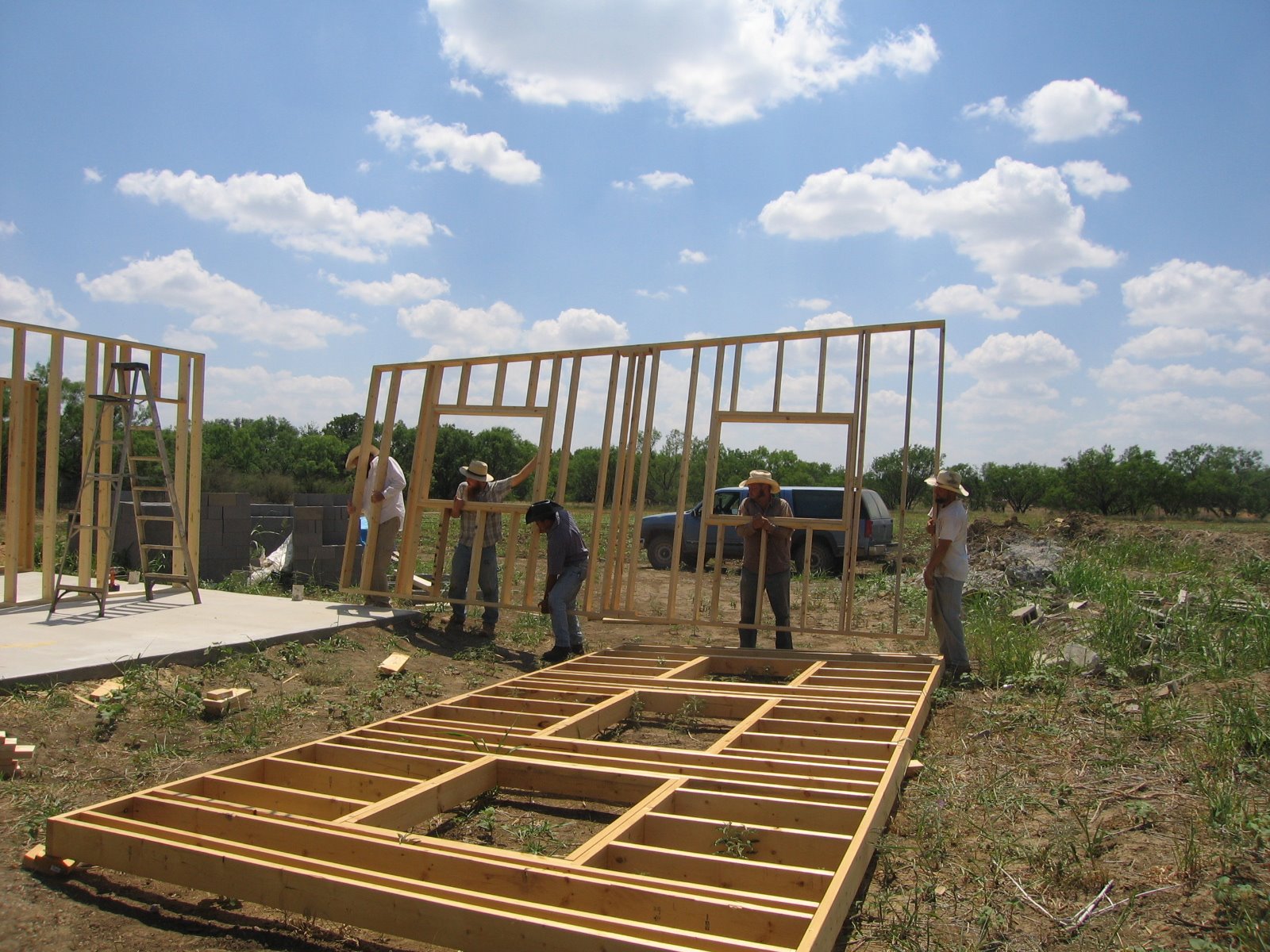
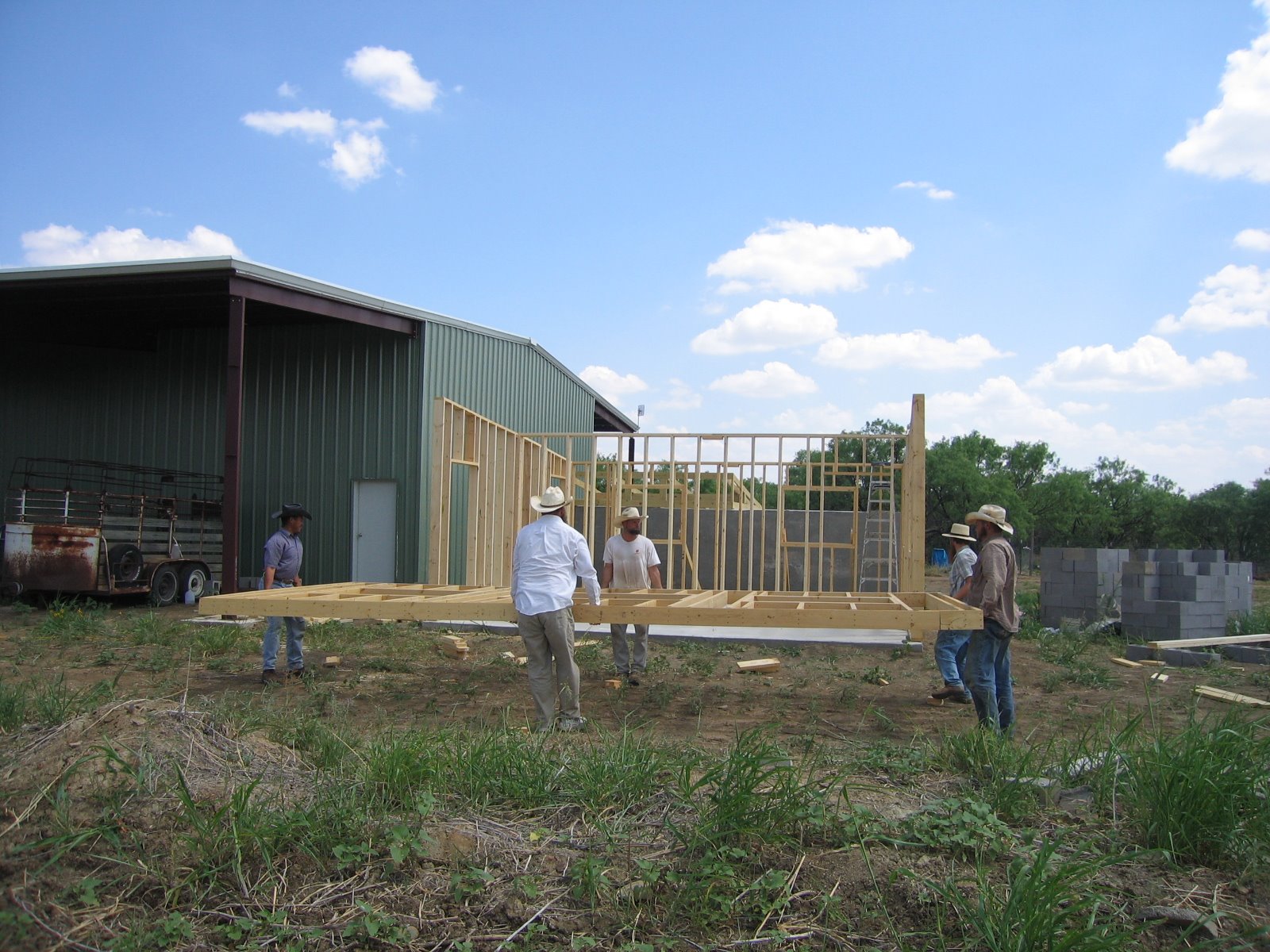
Time for a "barn" raising. The Lord has granted us the fellowship of like-minded brethren (see here, here, and here) to help and show their love for other brethren:
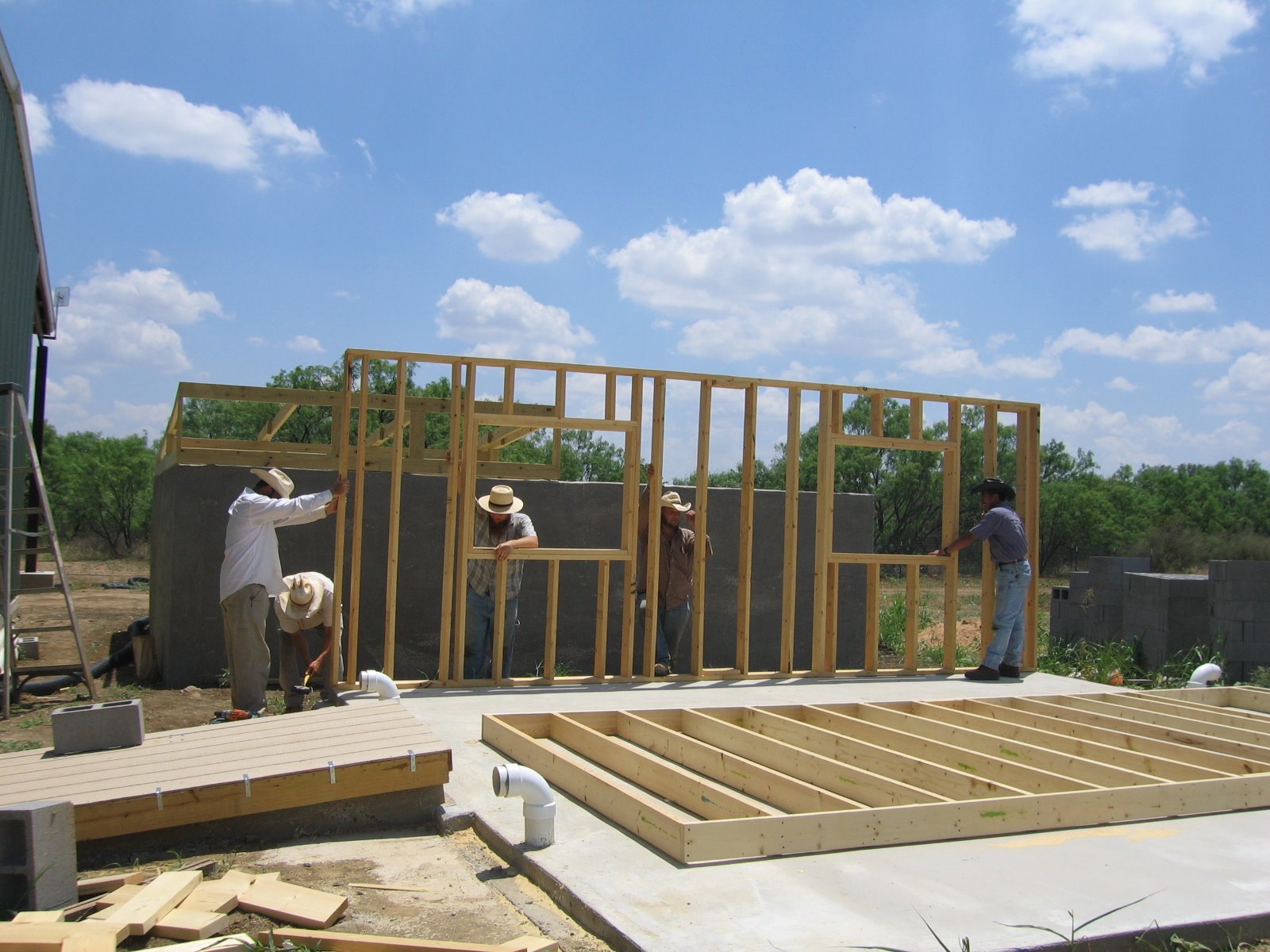
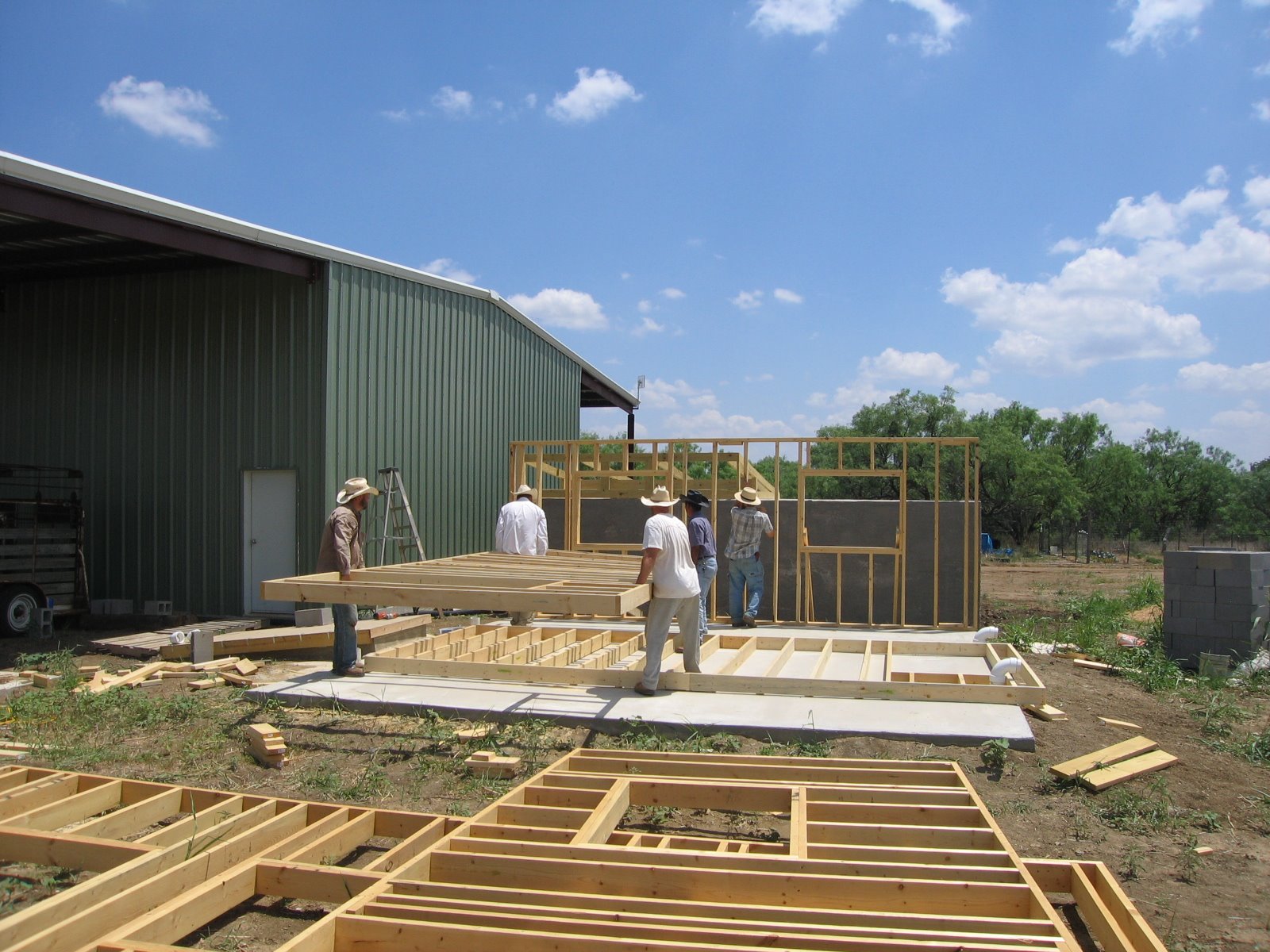
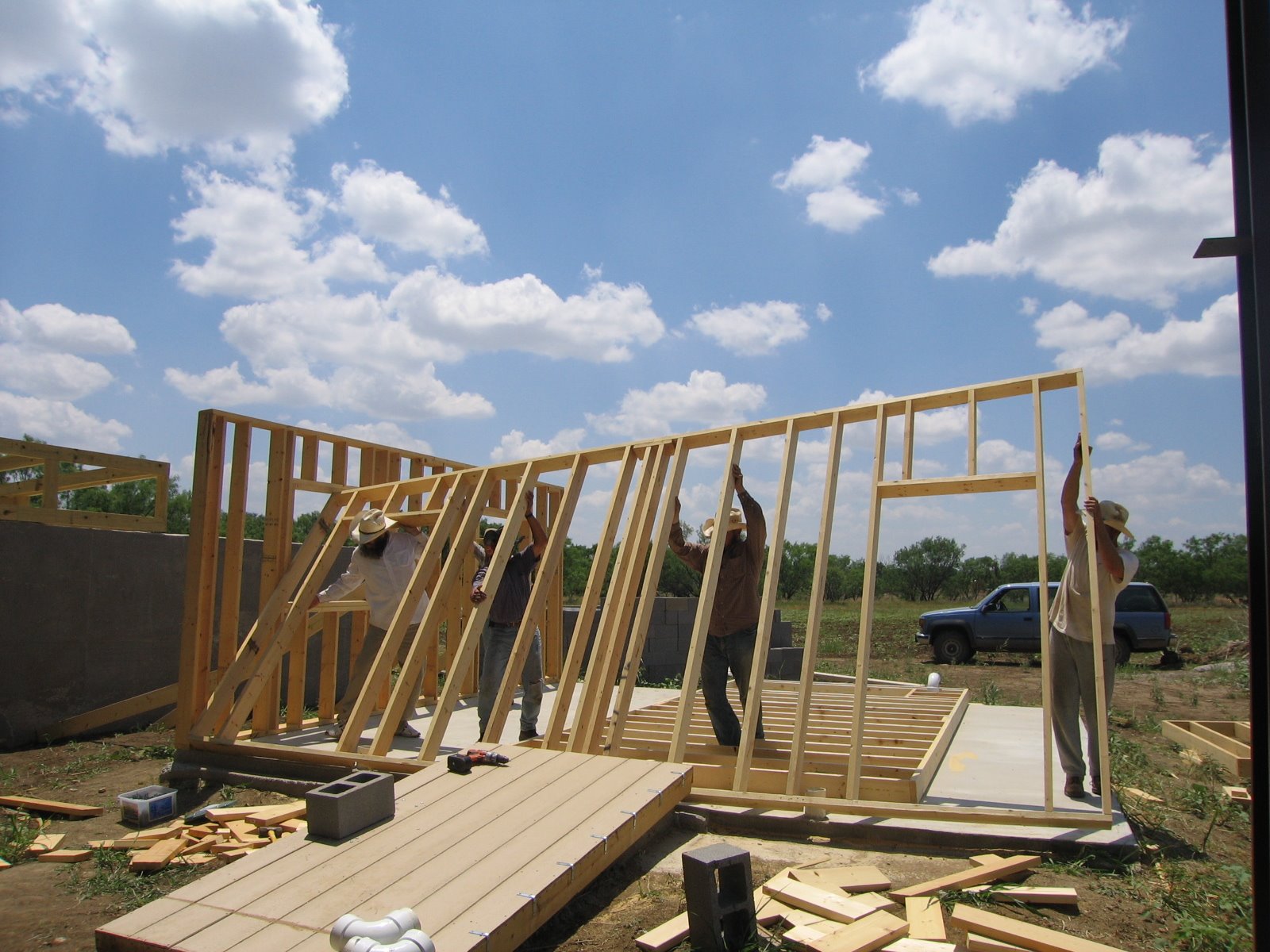
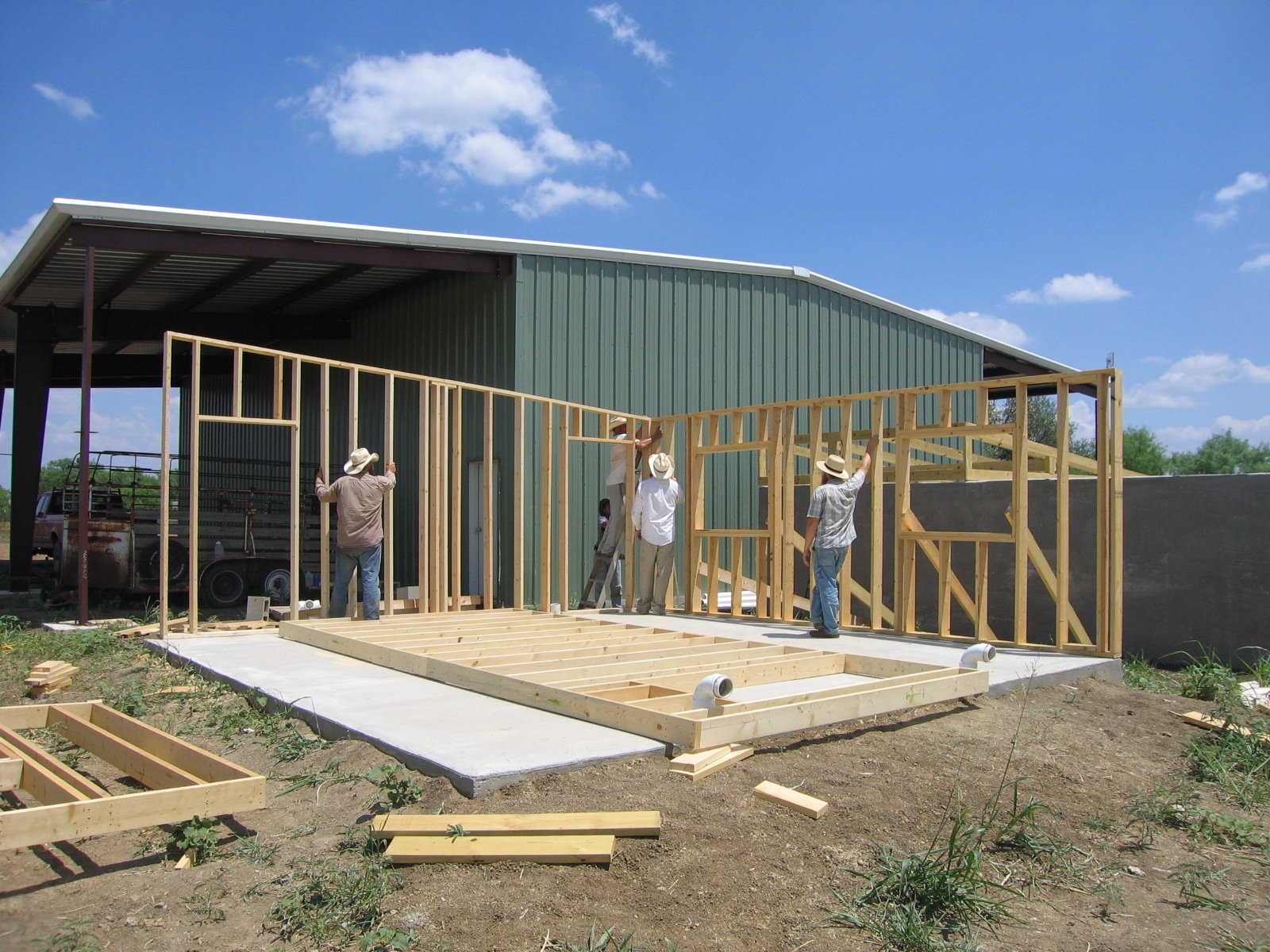
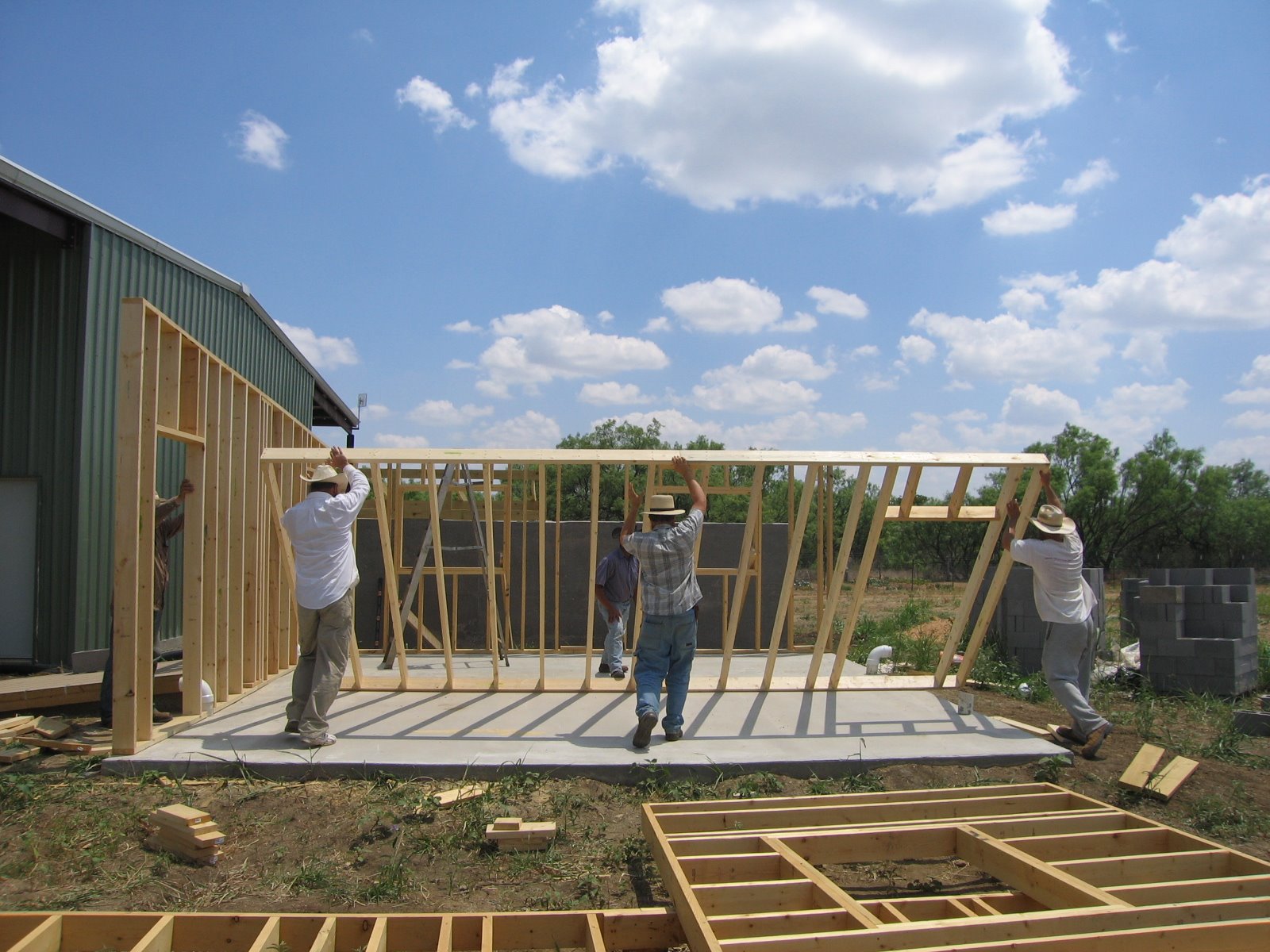


A quick point of note: when securing a wall to its perpendicular wall at a corner, and in anticipation of internal walls, you not only have the corner stud, but you need another stud to be placed stud width plus 3/4". This will allow for the tacking up of internal walls. I did that for the corners of the building; however, I forgot about the middle dividing wall. And so, Lord willing if I do put internal walls in, I will need to add a 2x4 wall stud to support the internal walls:
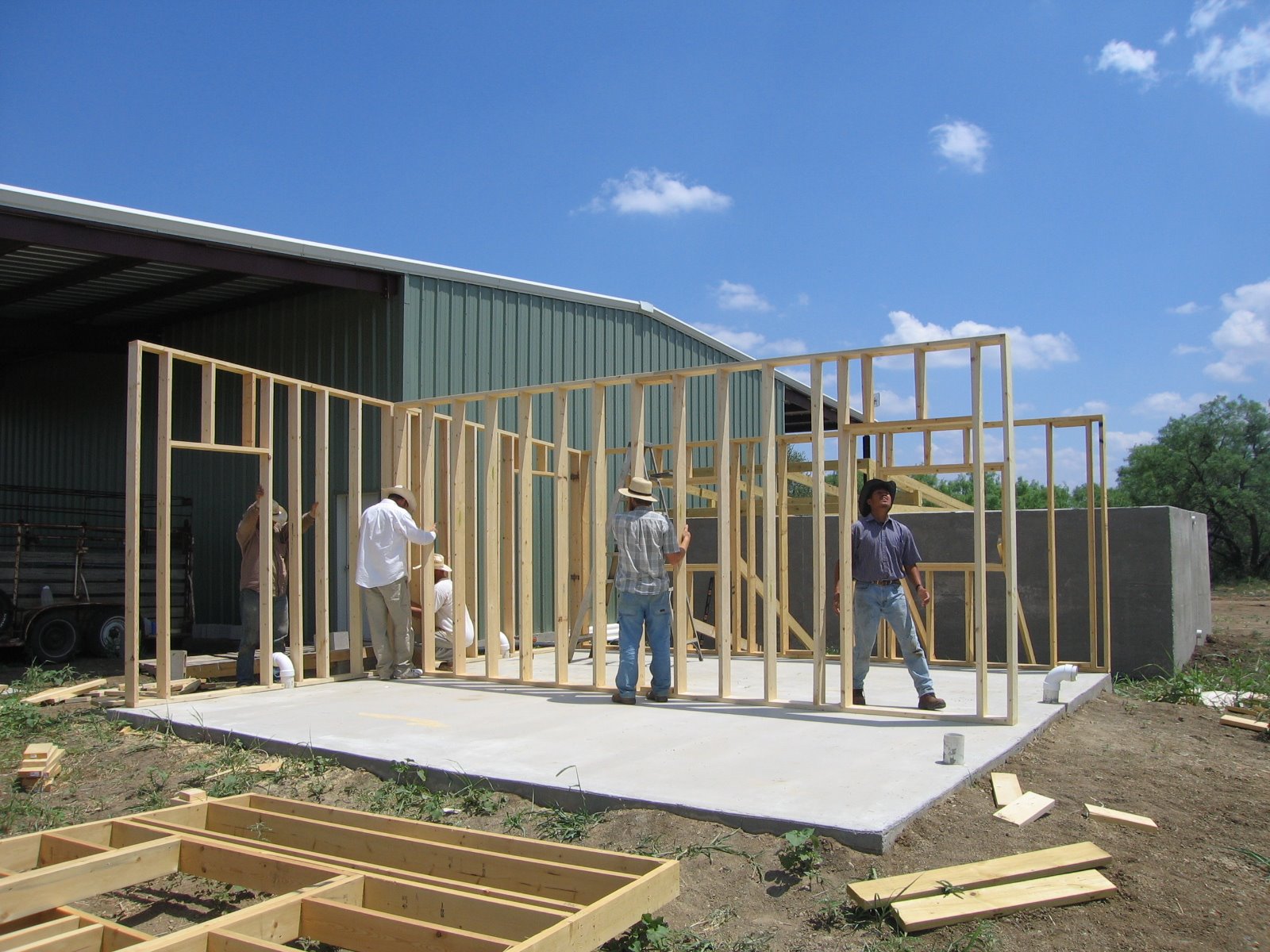


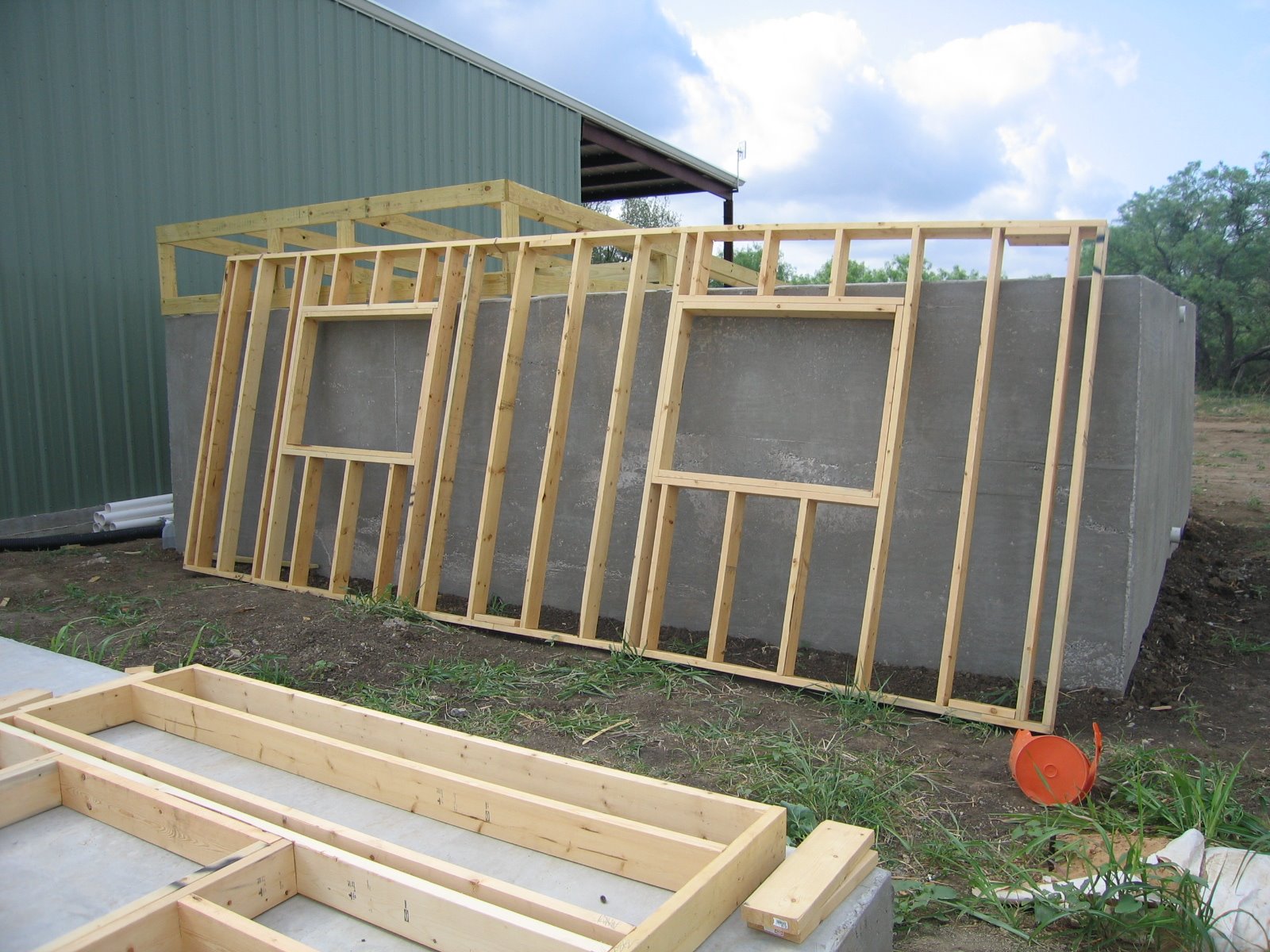
Here is a backside view with the first wall braced:
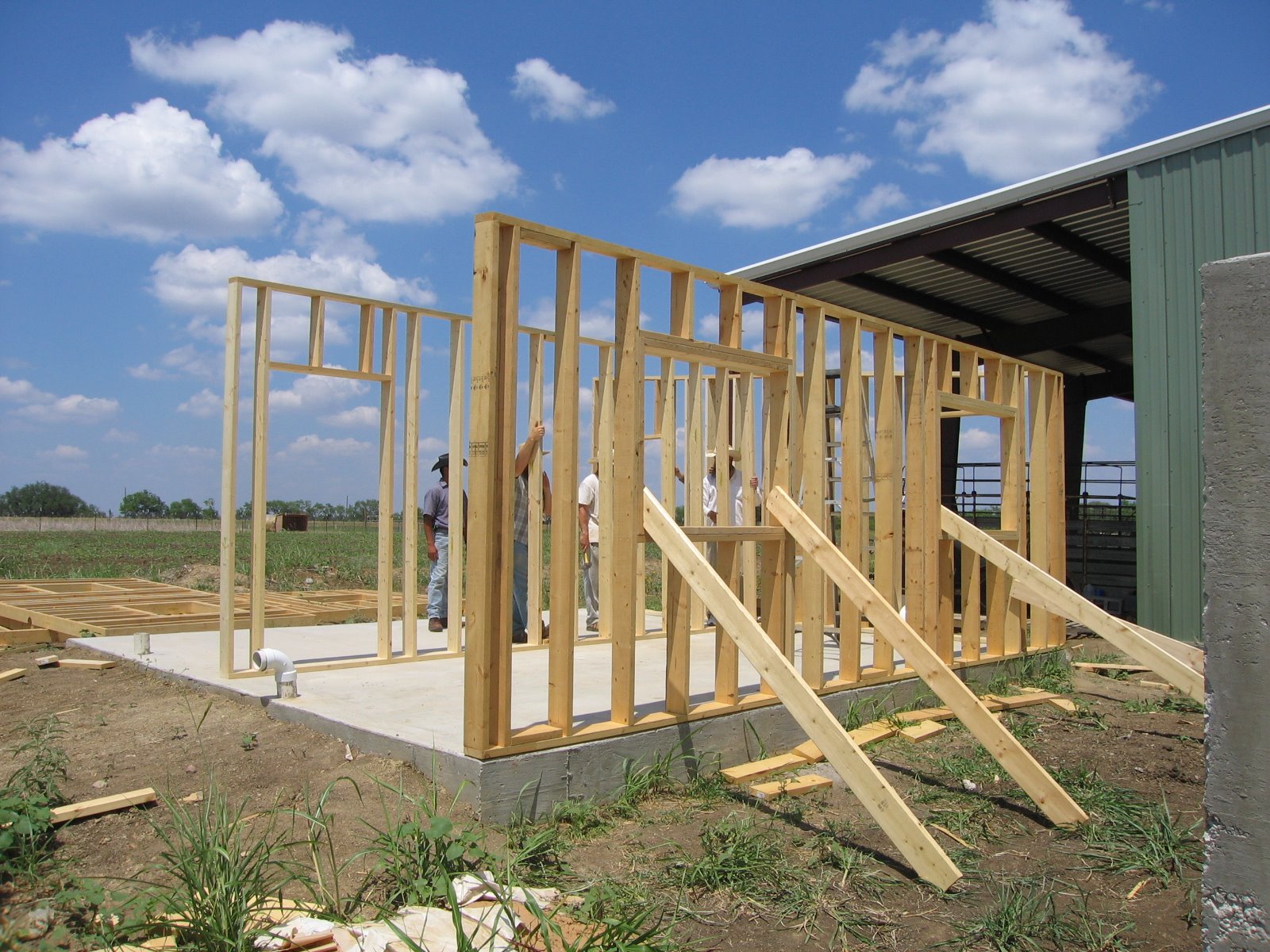


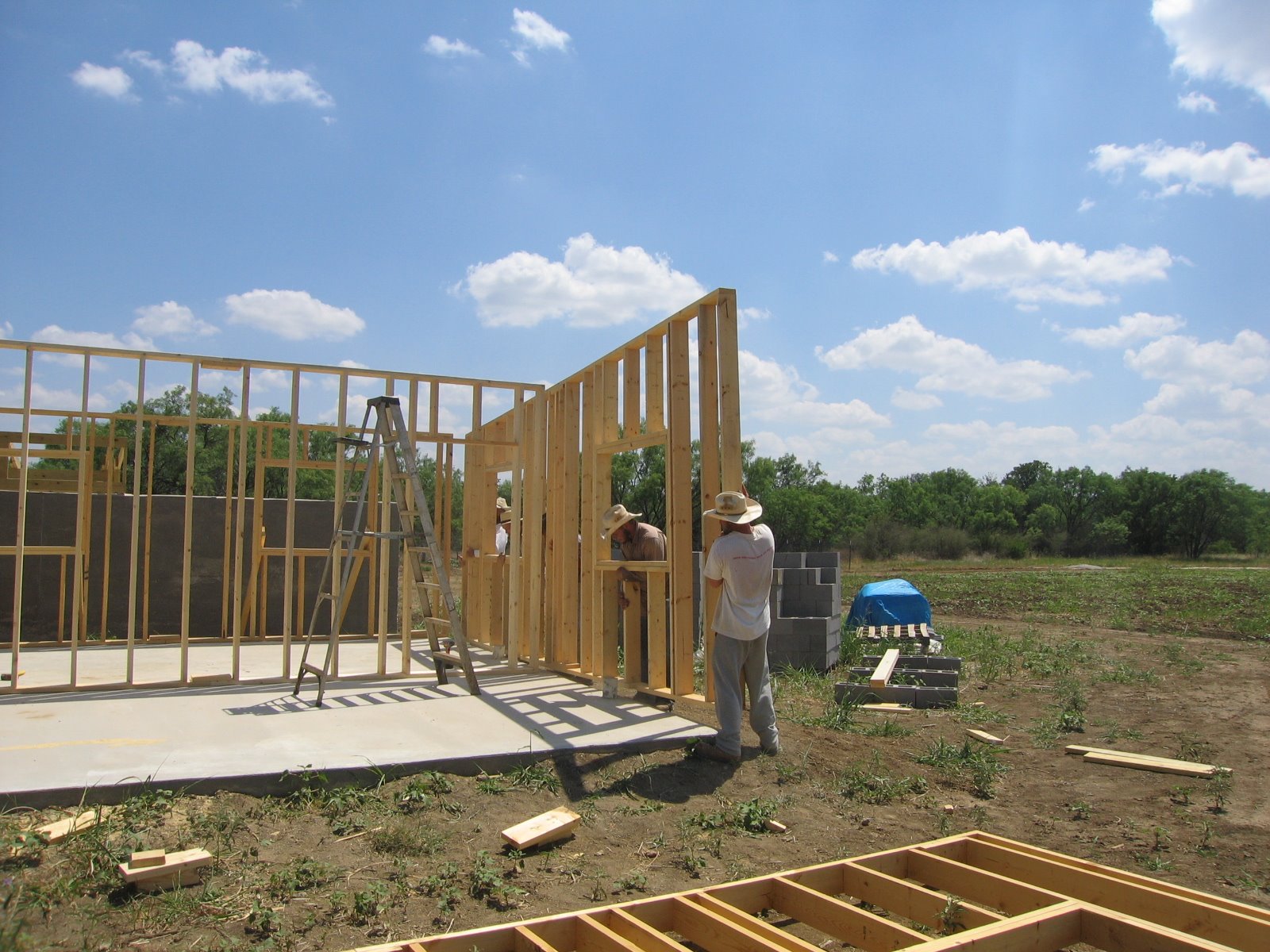
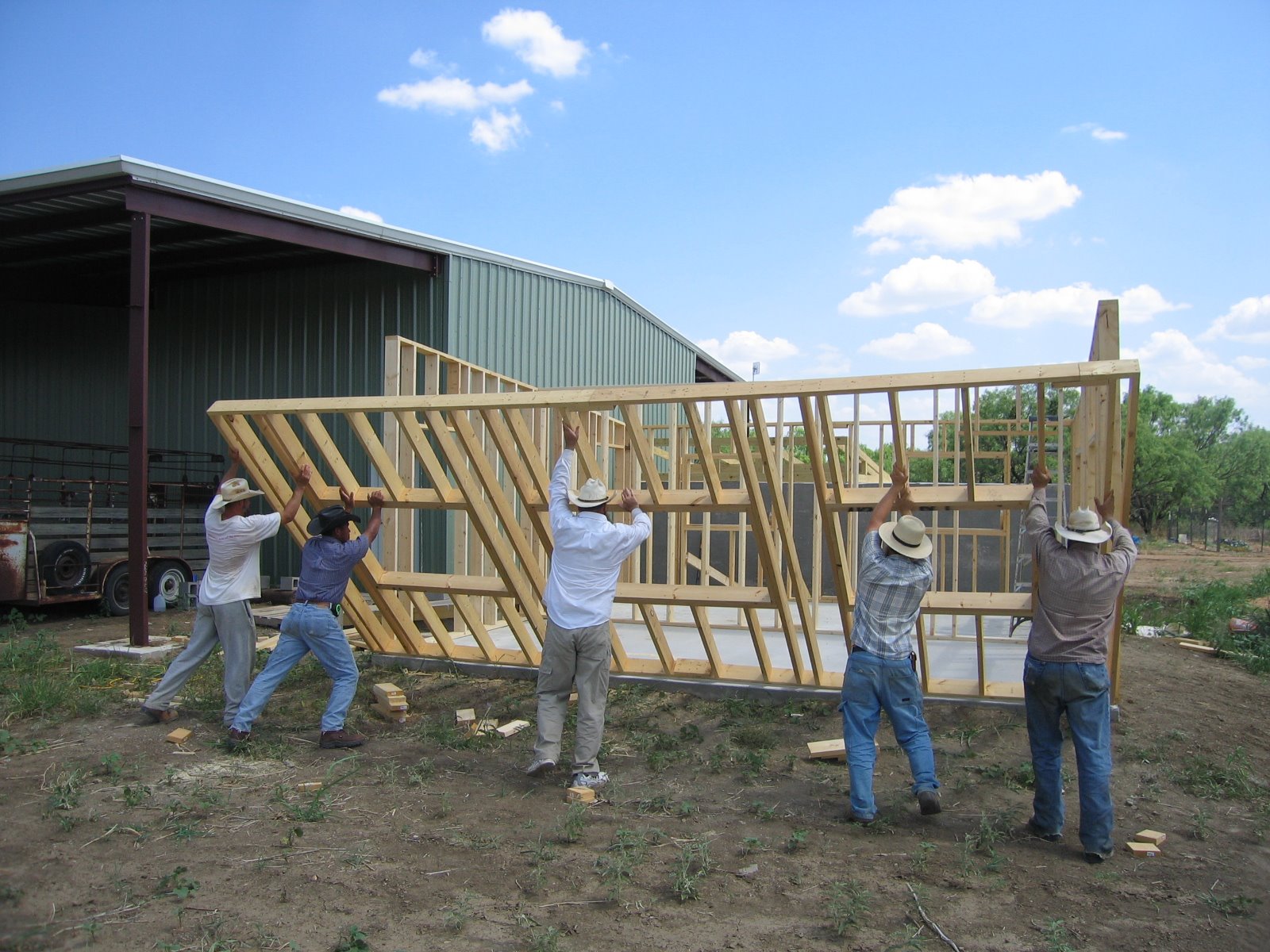
And more "barn" raising:
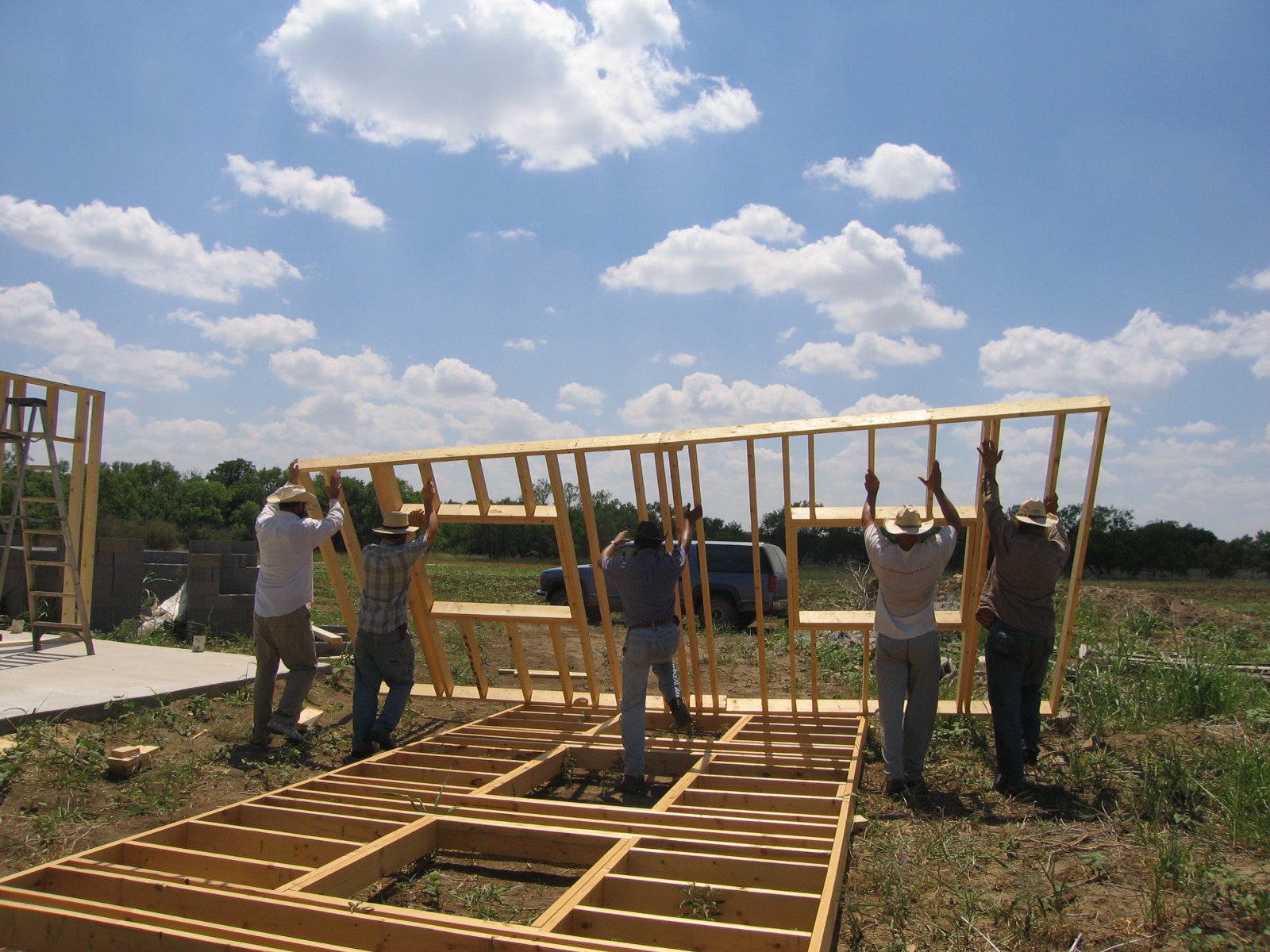


"I think the meaning of life is that way."
"Yes, I see it!"
"I think the meaning of life is over here, and I'm now contemplating it."
"Yes, I see it!"
"Isn't it meal time?"
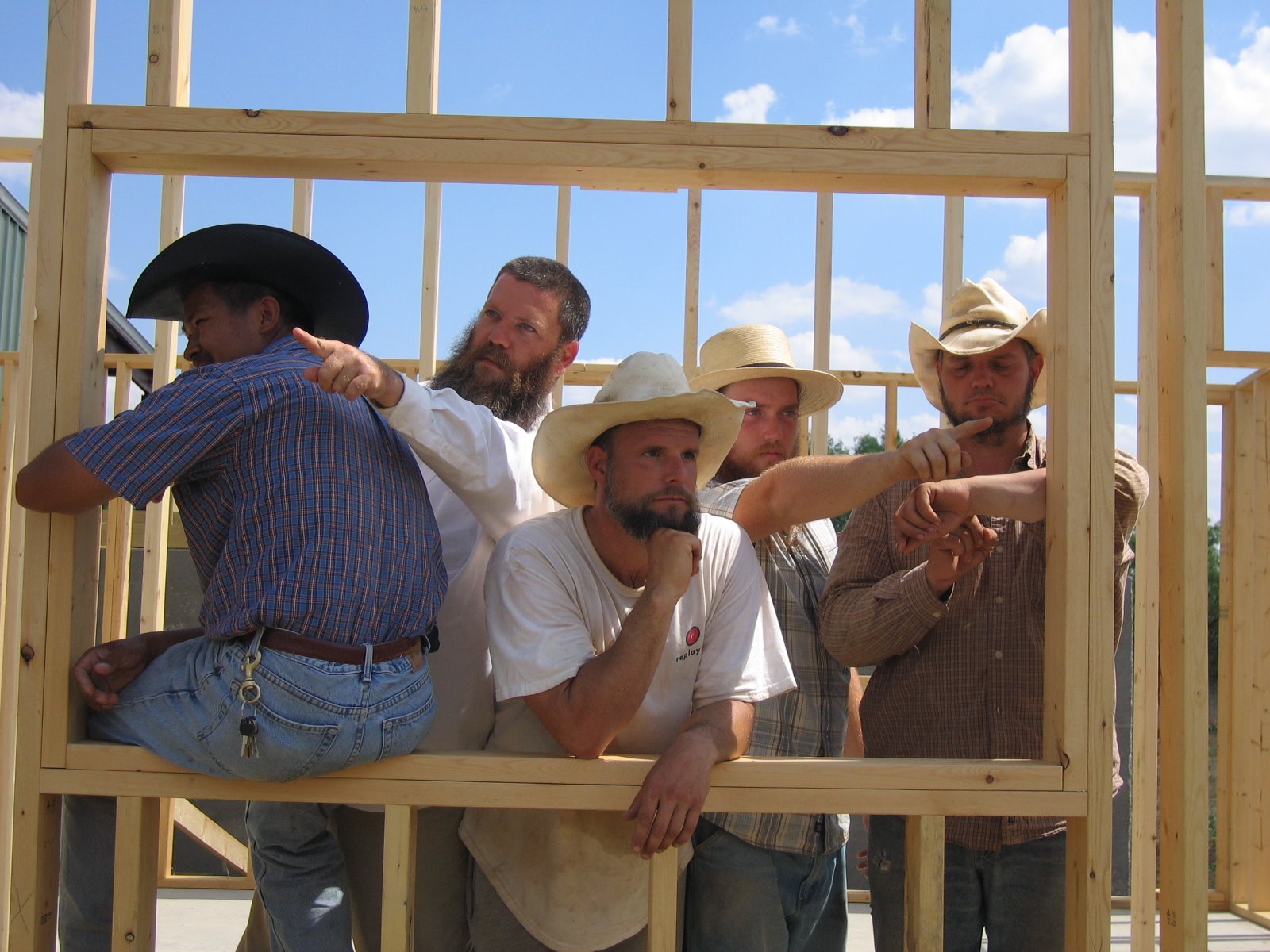


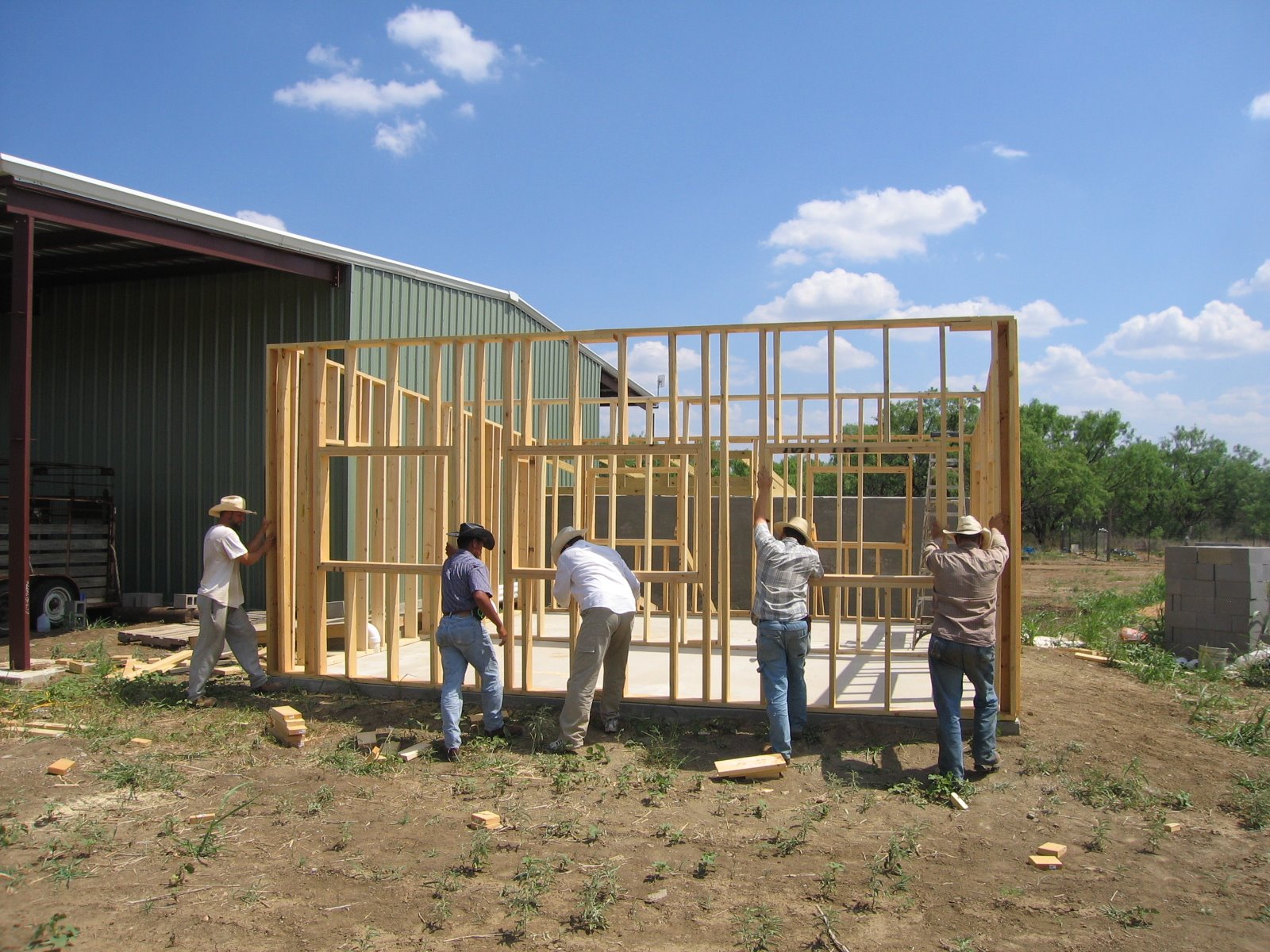
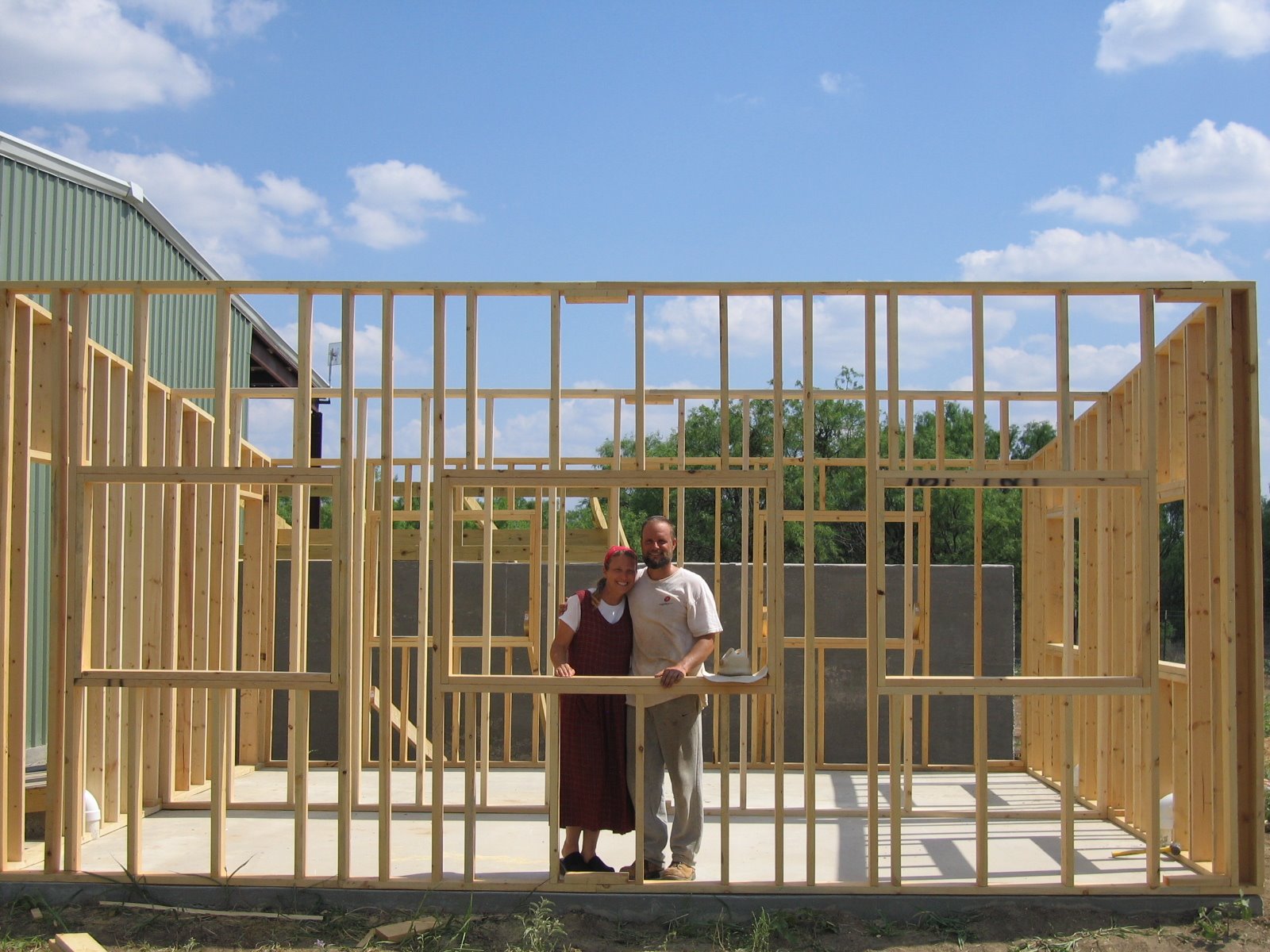
Welcome to the frame of our summer kitchen building:


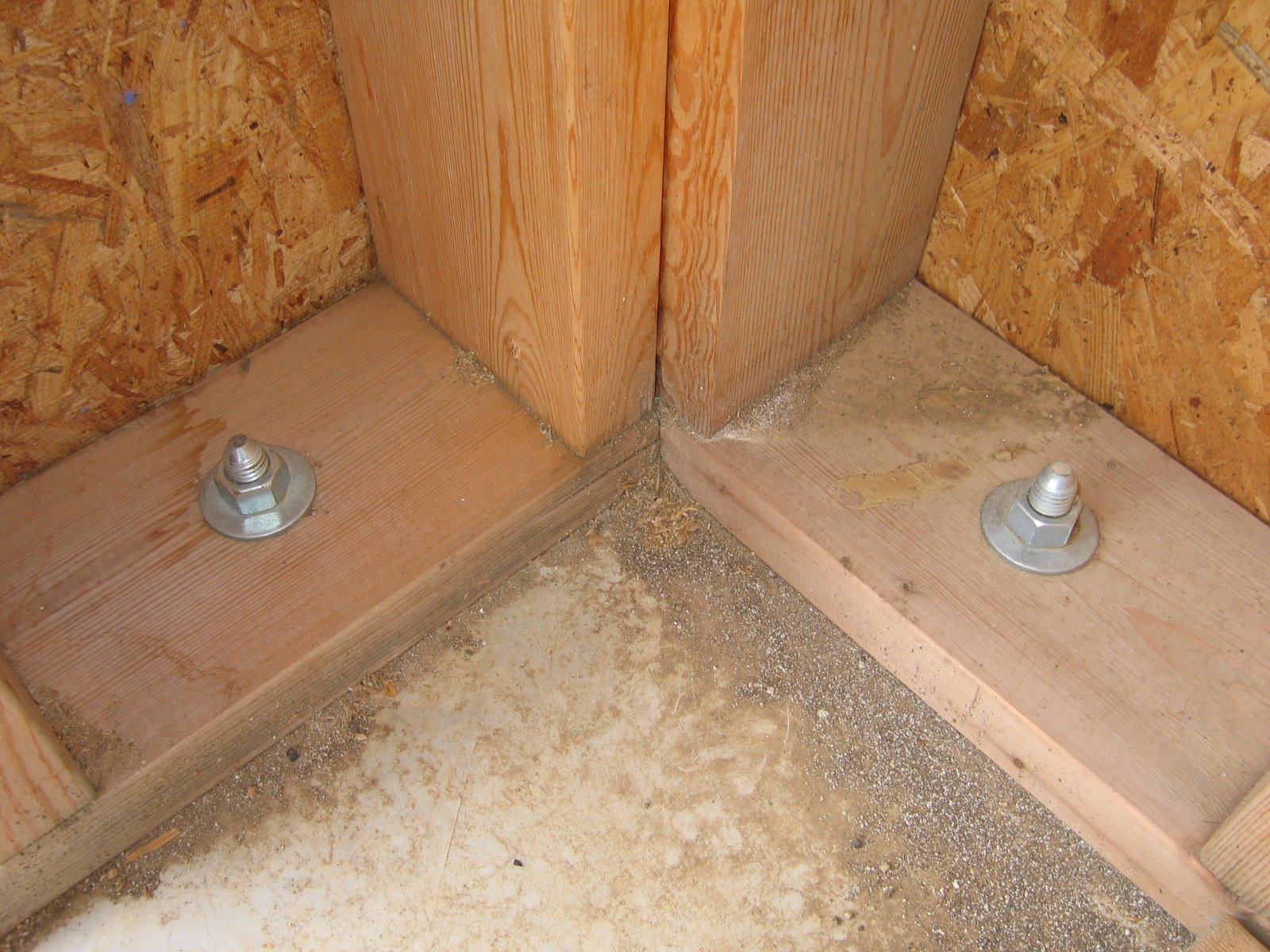
To secure the building down, we anchored it with heavy-duty 4-5" concrete bolts:


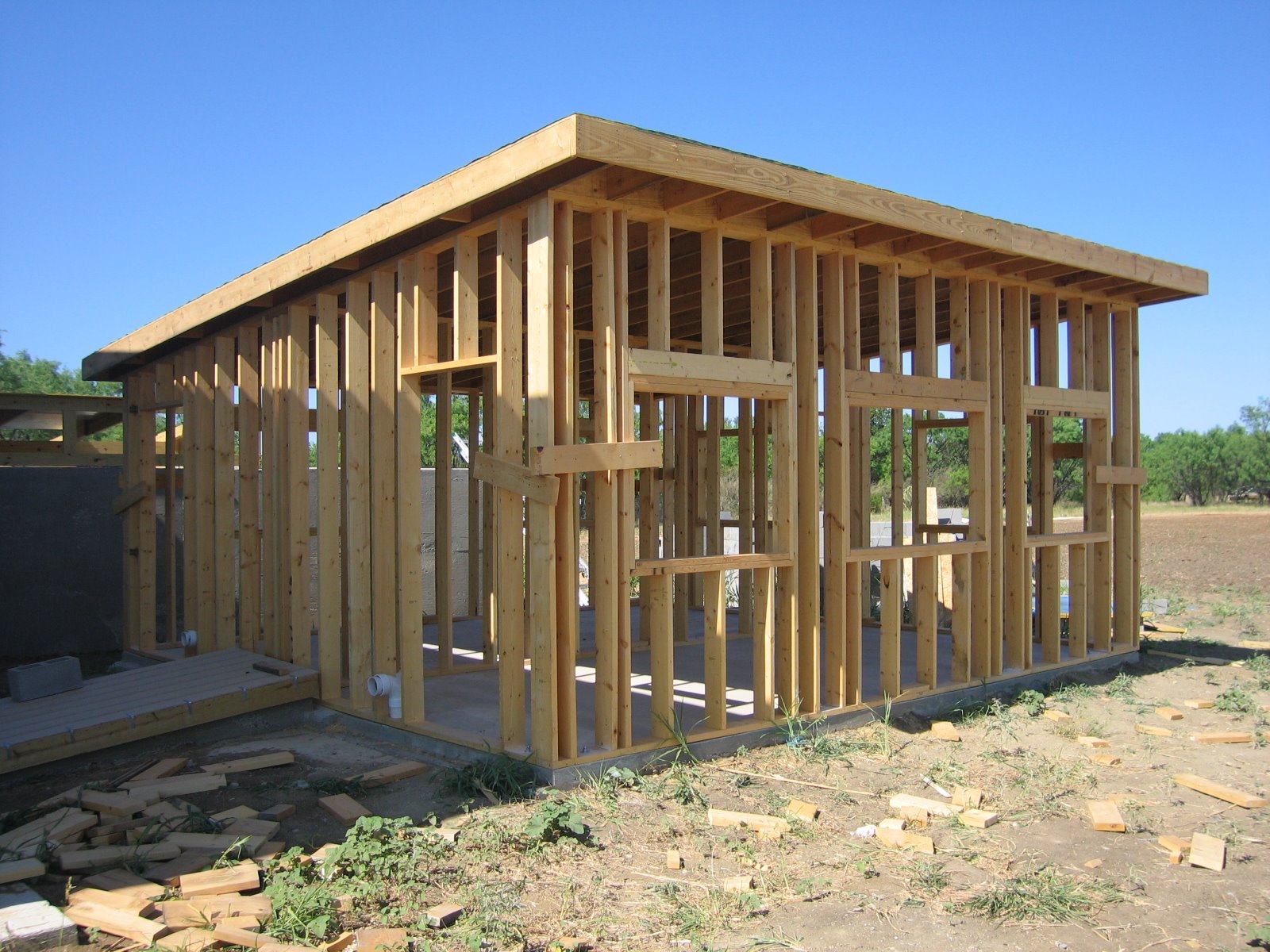
Here is the structure with the roof put on. We used 24' long, 2x8 rafters for the roof, and then covered it with Solar Board to help with insulation. Notice here above each window frame now has a "header." This was suggested to me by our neighbor Logan, who has had more experience building. This is to keep the pressure from the rafters causing a sag in the window frames on the windows. Thanks to Logan:


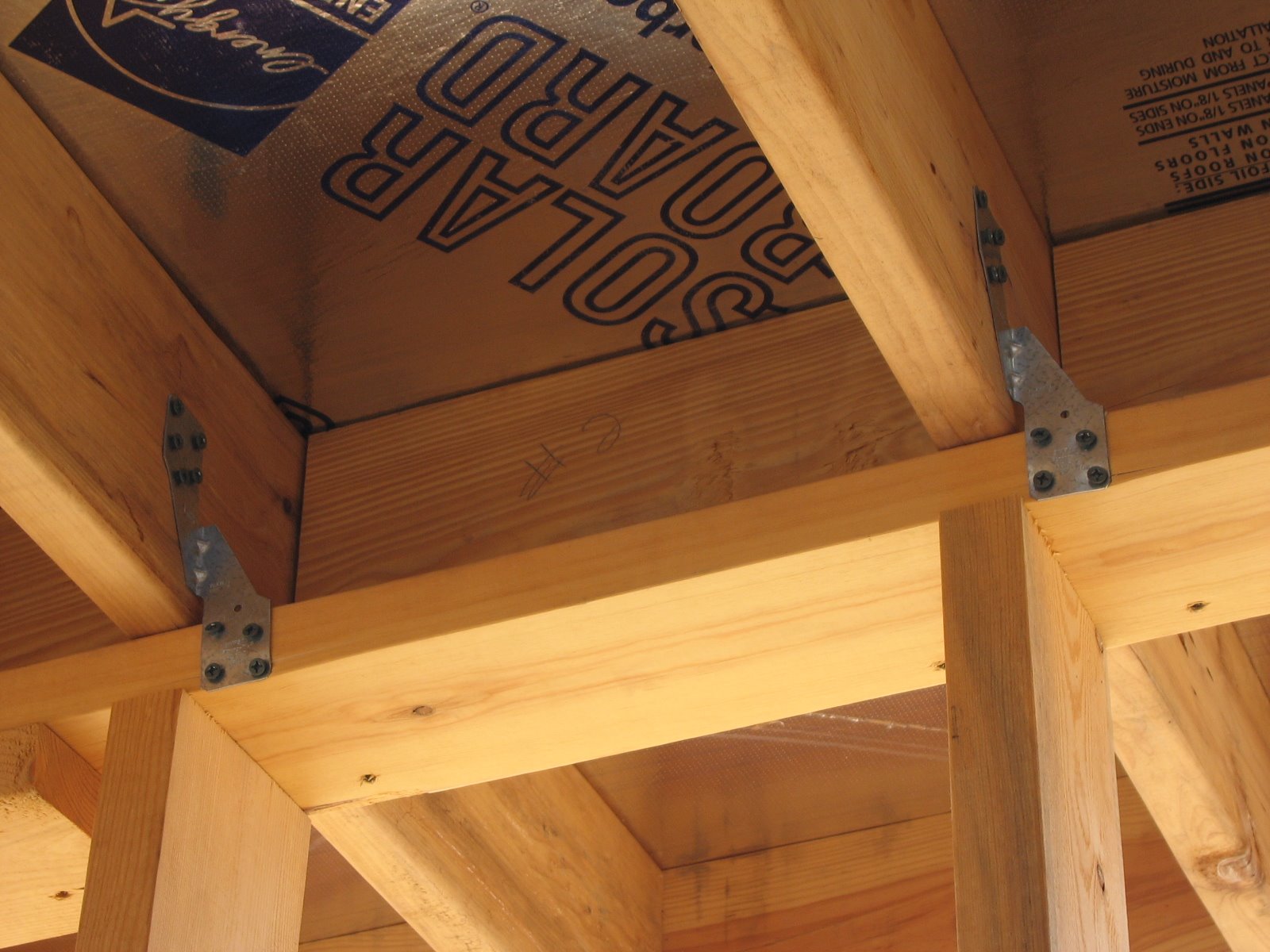
The metal anchors are called "hurricane clips", and they apparently help tremendously with high winds:


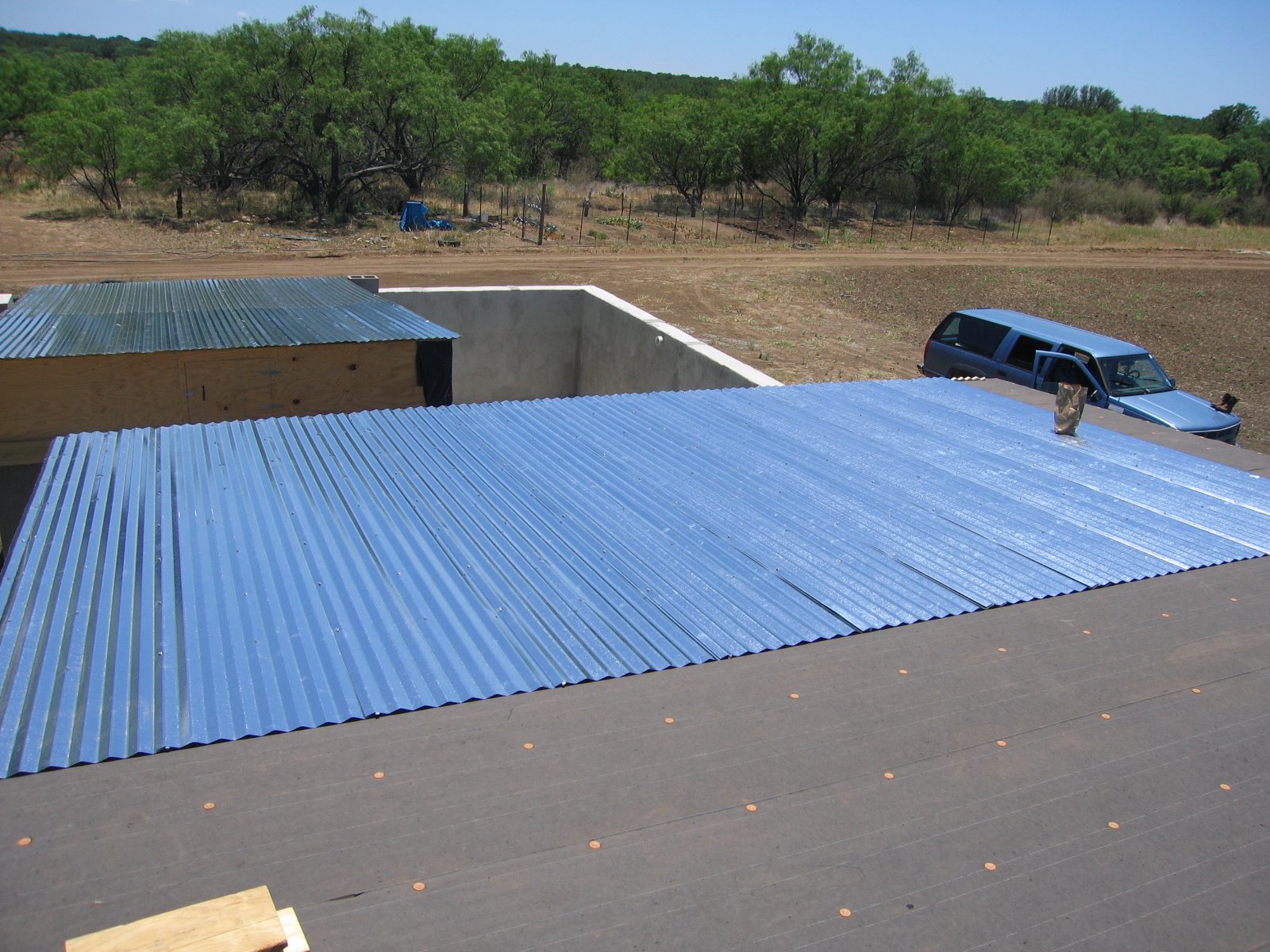
We covered the roof with tar paper and then began installing the corrugated roof metal:


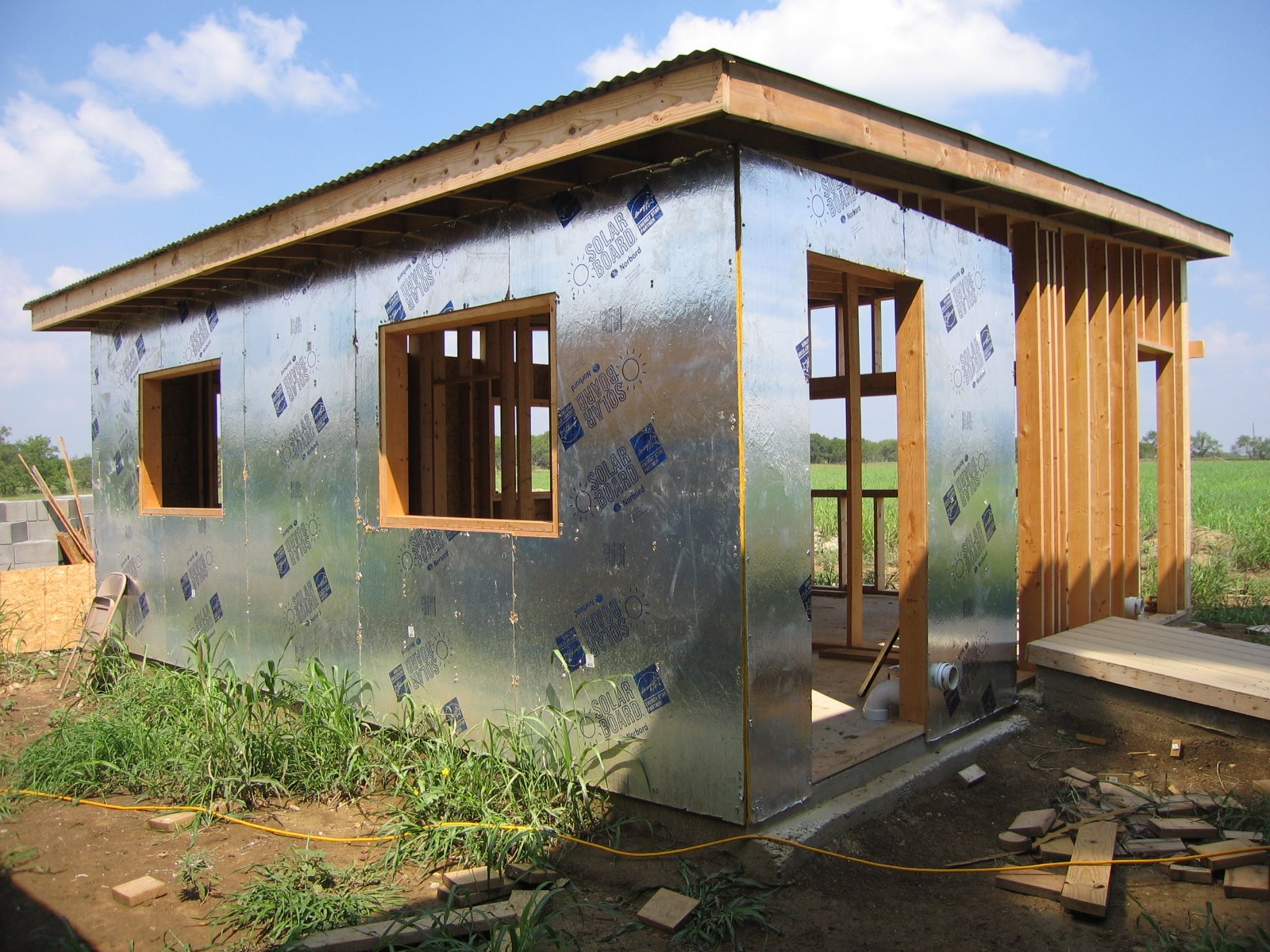
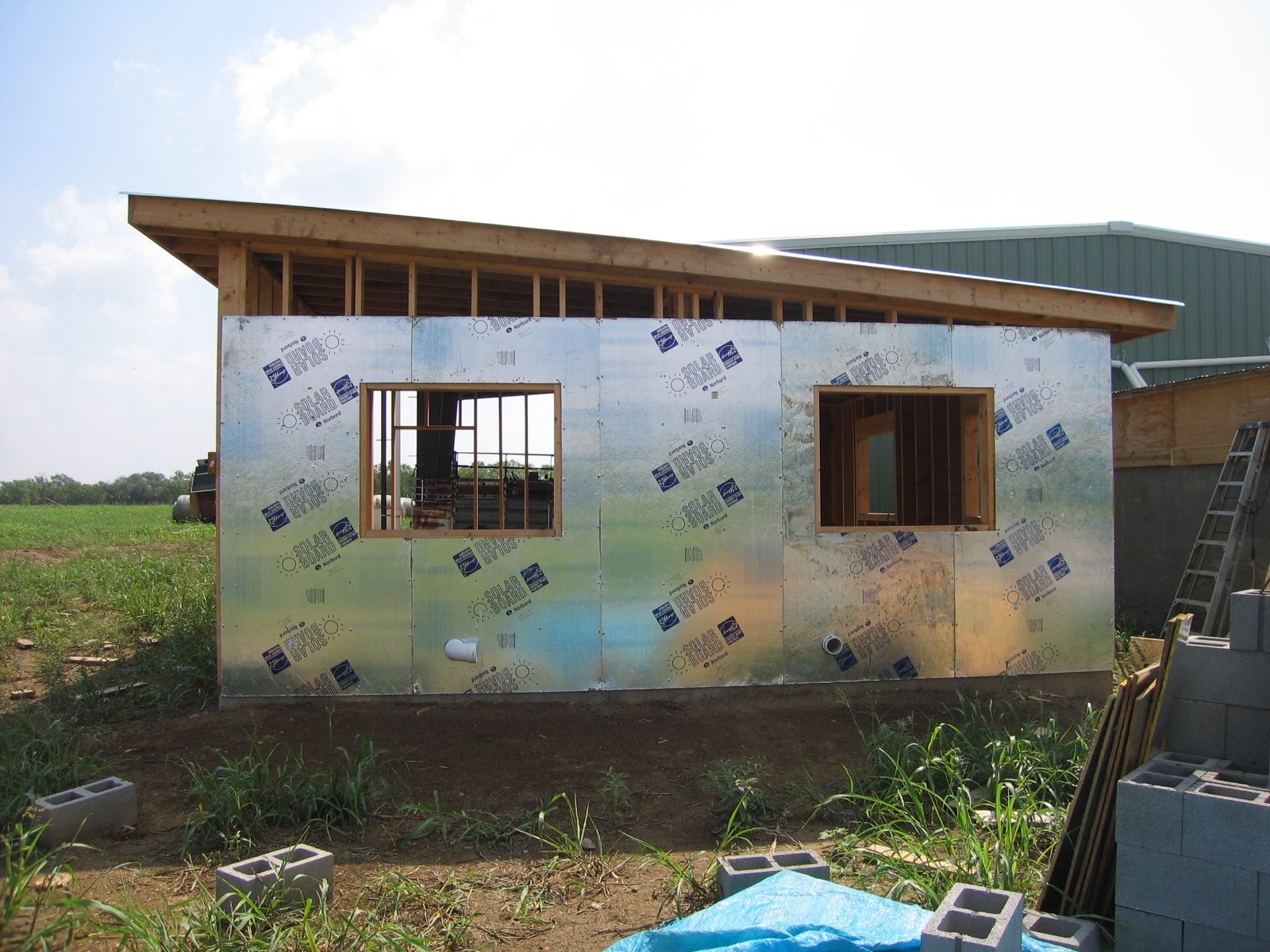
I continued with Solar Board for the siding, and this is how far I have worked on it:


The Lord is gracious and merciful.

-- David

Labels: , , ,

Bookmark and Share

Friday, July 4, 2008

Root Cellar/Storm Shelter

Part of our long term outlook is to be able to store food long term. Apparently, people did that for lots of years without freezers and refrigerators; and apparently, they did that in some way by storing food underground where the temperature, which can affect food adversely, is consistently cooler. Also, the weather here includes the possibility of tornadoes and severe thunderstorms. And so, we began to pursue building a root cellar/storm shelter.

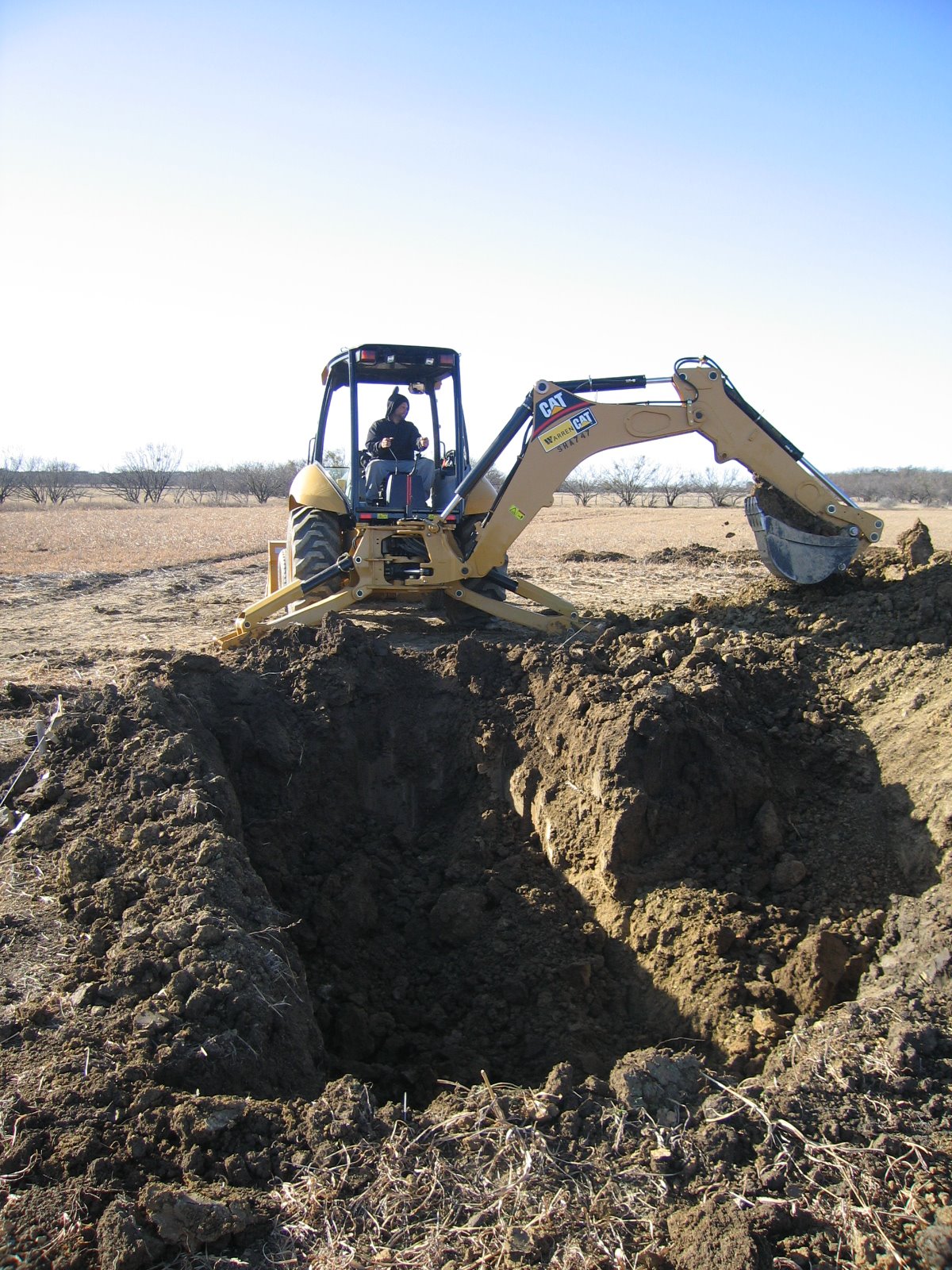
Once again, I thought it was probably best to rent the backhoe so as to be able to remove quickly the quantity of dirt a room-size hole in the ground would contain:


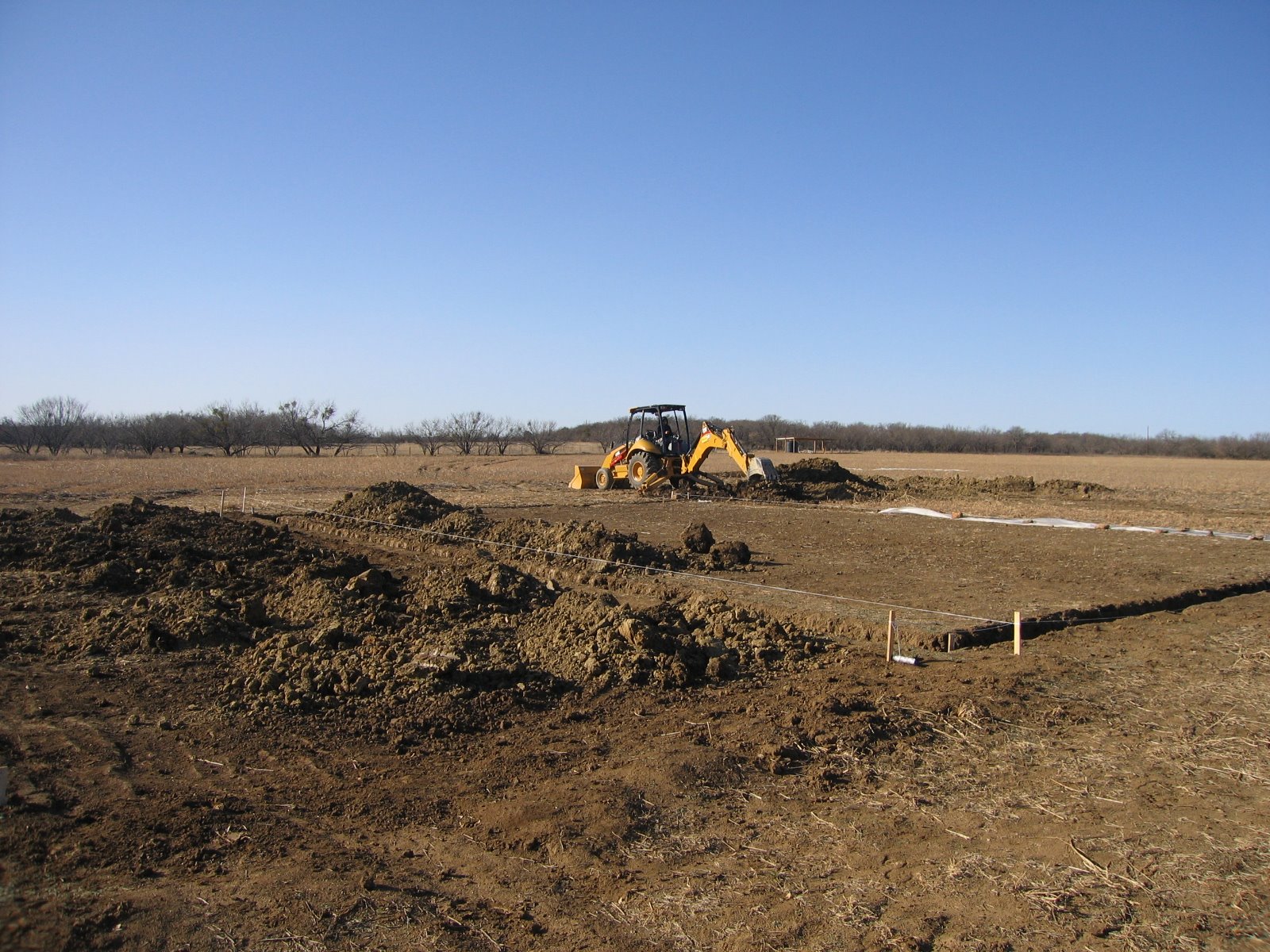
Here is the dig in relation to the barn, generally. I had hoped to have the entrance to the root cellar sheltered so that if we needed to go into the root cellar during a hail storm we would be protected by the barn's North lean-to. However, the barn ended up needing to be constructed a little more away from the root cellar hole:


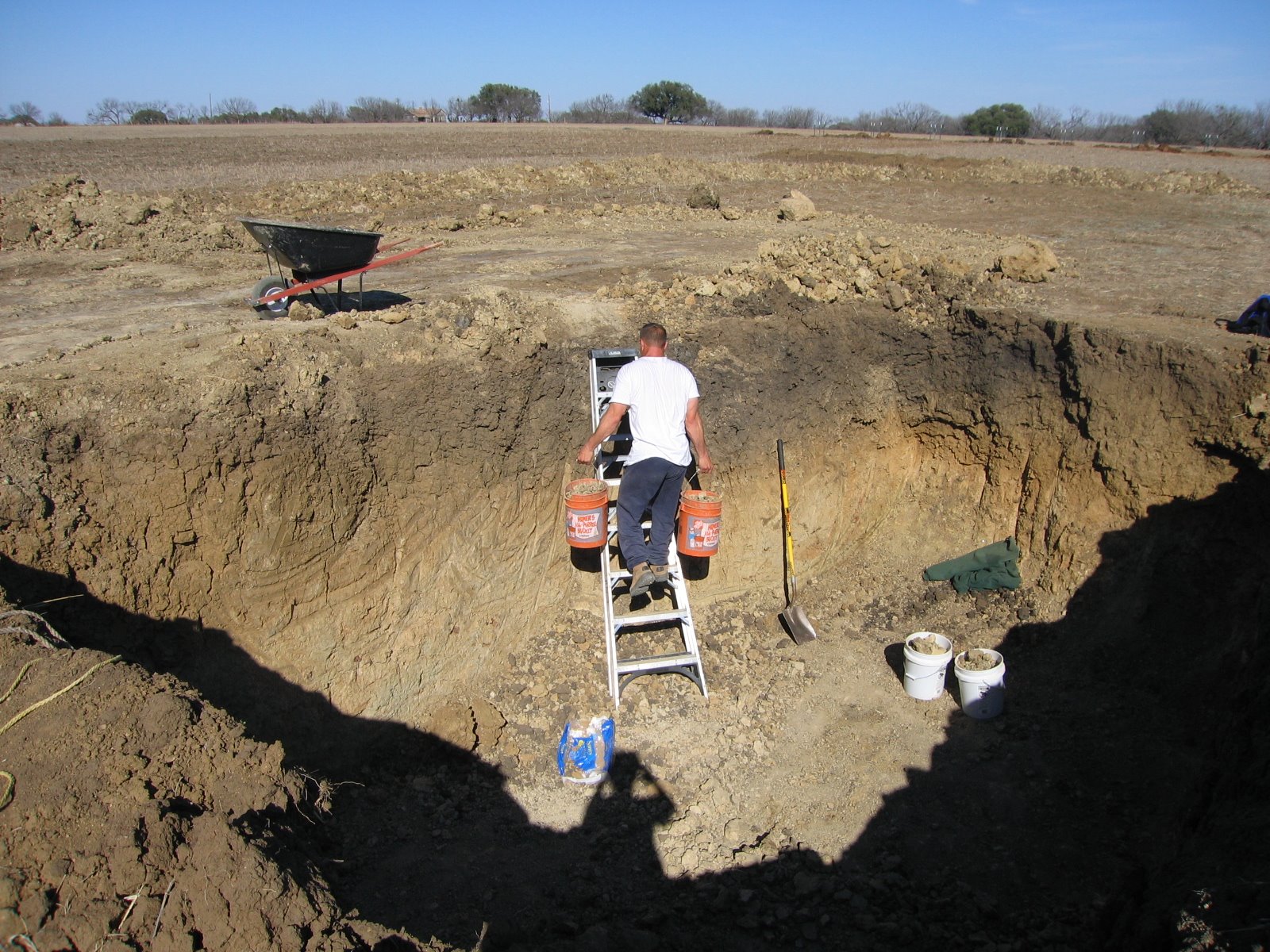
There comes a time though that the backhoe cannot reach all of corners and sides, and so the rest must be done by hand:


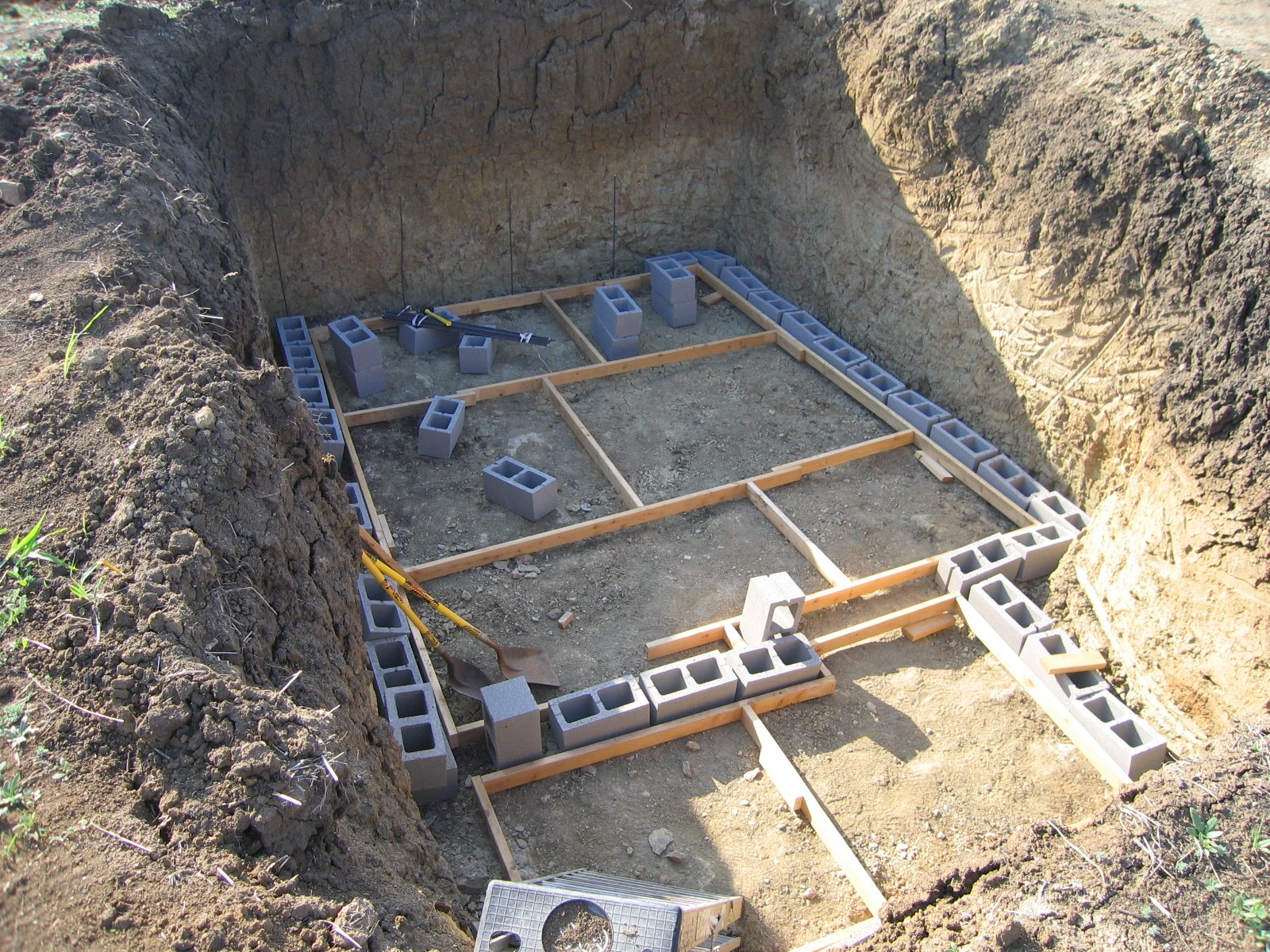
My idea initially was to build steel reinforced (rebar), concrete, cinder block walls. I was hoping to have a very long lasting, strongly built root cellar. Here, I laid out the foundation row in order to set forms to pour a concrete footer:


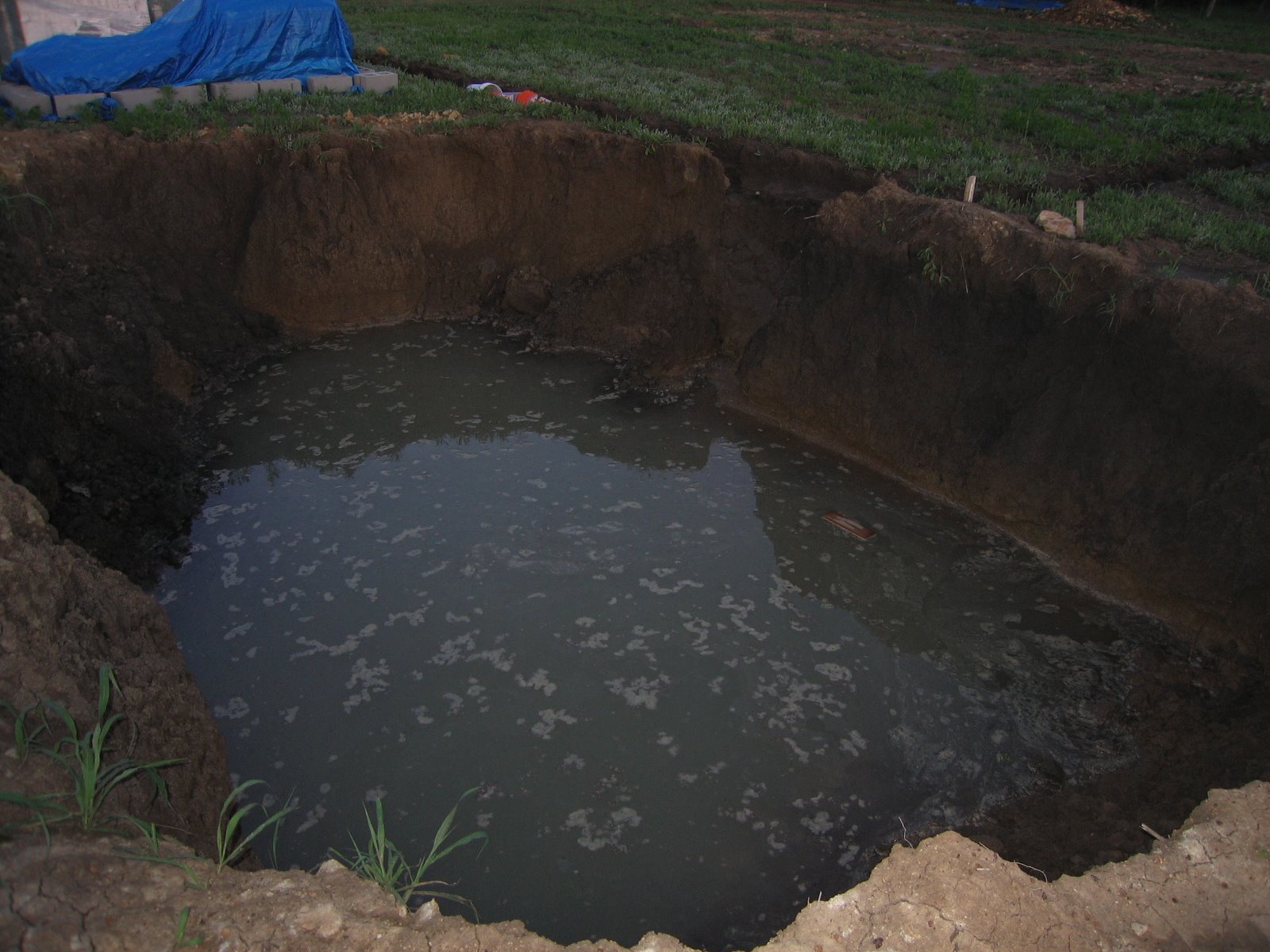
It appeared though the Lord had other plans. We were greatly blessed with an above-average rainfall last Spring. While that was great for the gardens, it wasn't so great for our root cellar project:


The walls caved in and buried just about all of what we had done thus far. It was a little difficult to watch; but we tried, with God's help, to maintain an attitude of trust in His will. And so the digging once again began.


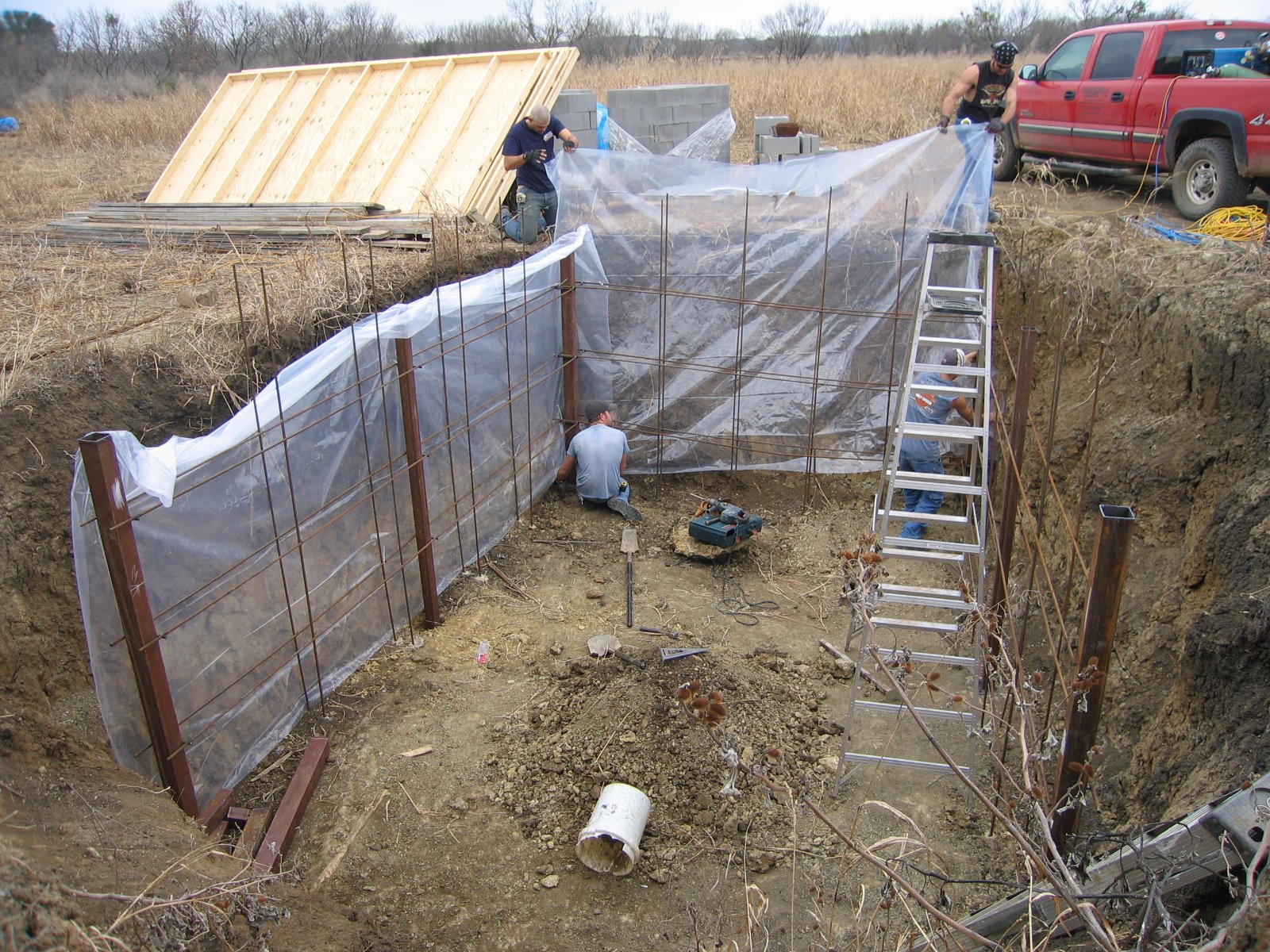
By the time it was ready to go amidst all of the other projects on the land, it was around 6 months later. During that time, I had thought about the direction I was heading with the design of the root cellar; and decided that I would like to have something stronger, given the example of the caved-in dirt we had just experienced. At this point, I thought a concrete design would be best, and that we would build a slab for the cellar roof to allow for the construction of a building on top as the upper insulation for the root cellar. And so with that in mind, but again due to my lack in skills, I decided I might hire someone to pour it.

And so thus began once again the root cellar project.


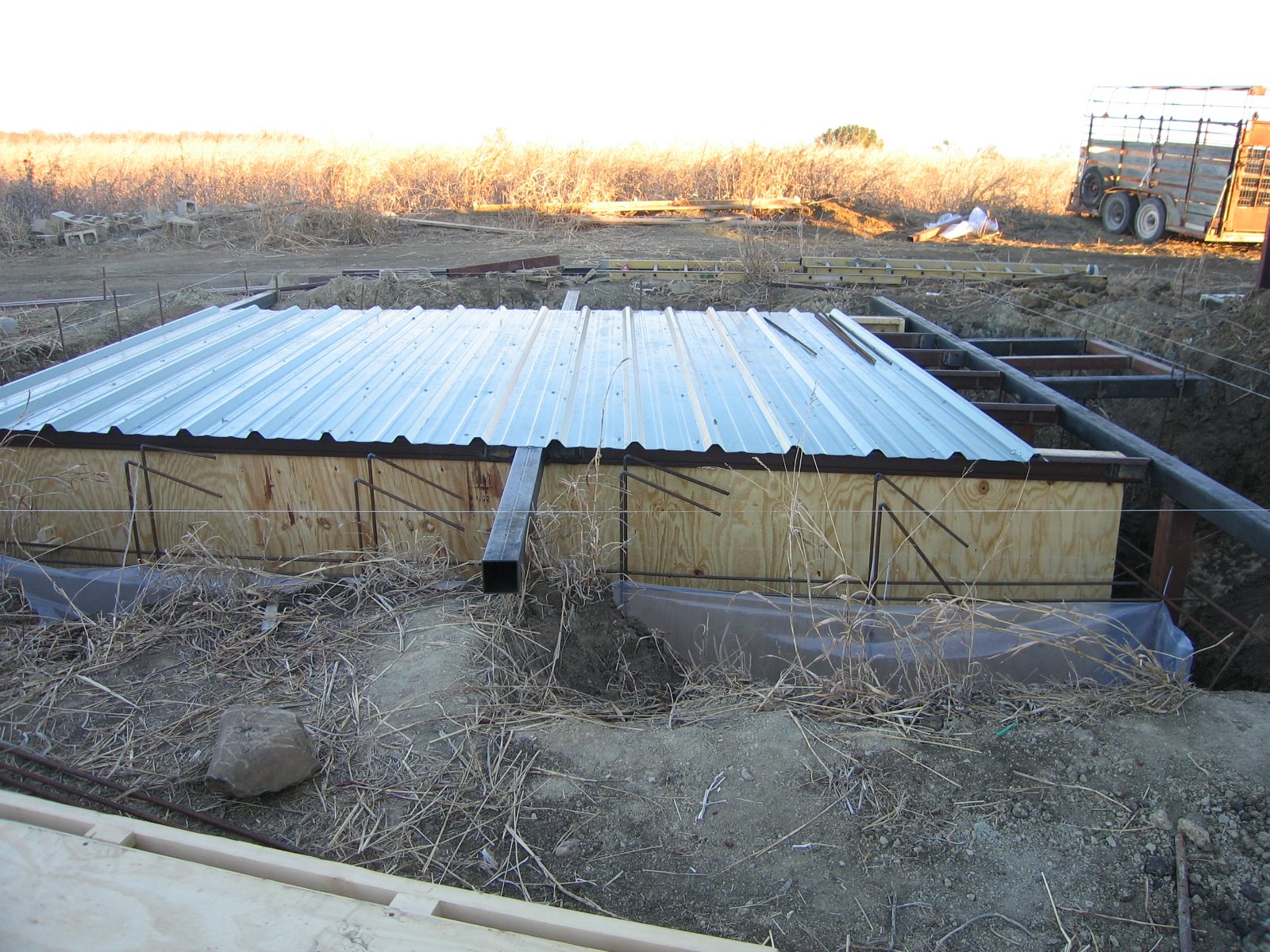
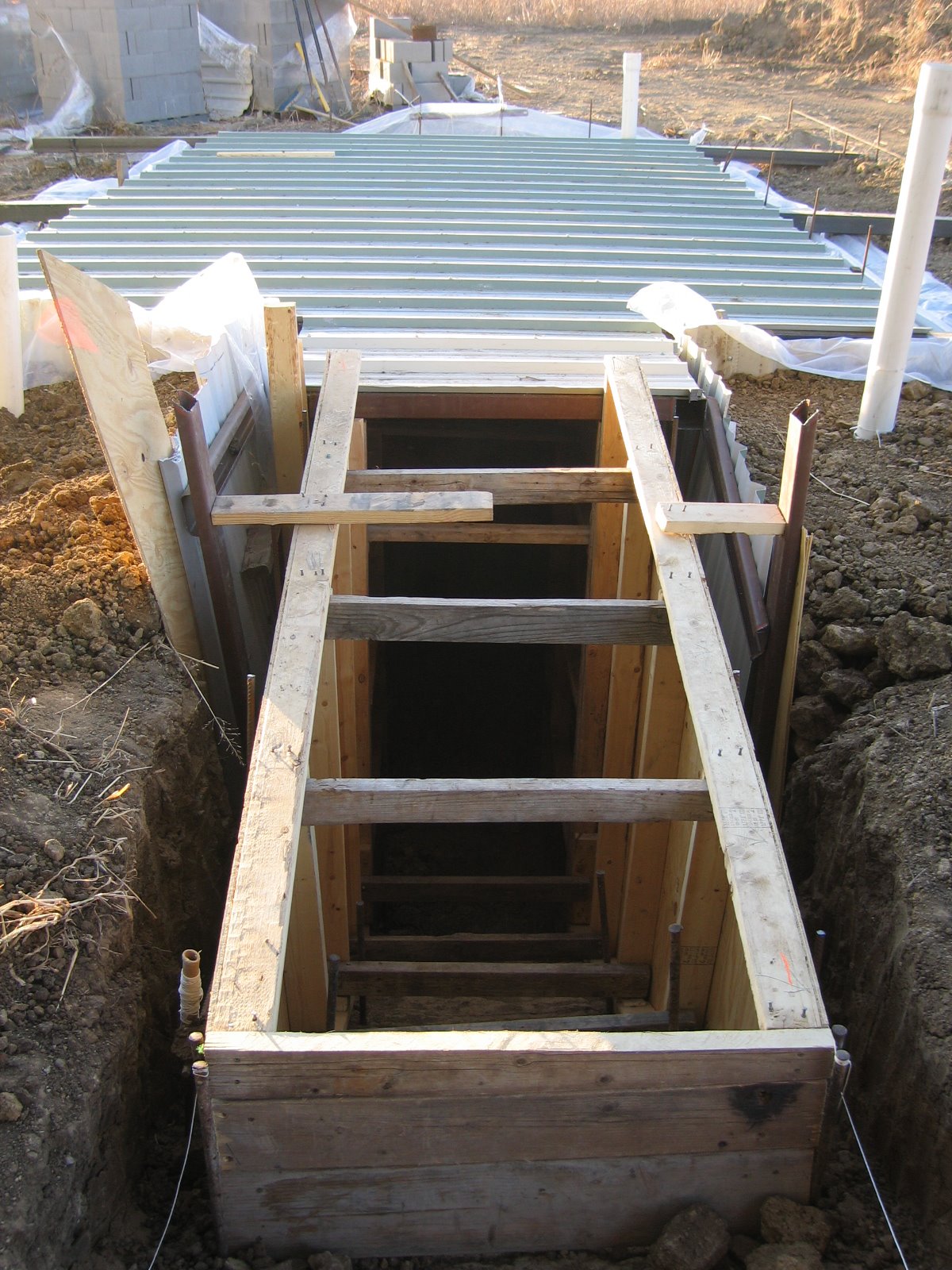
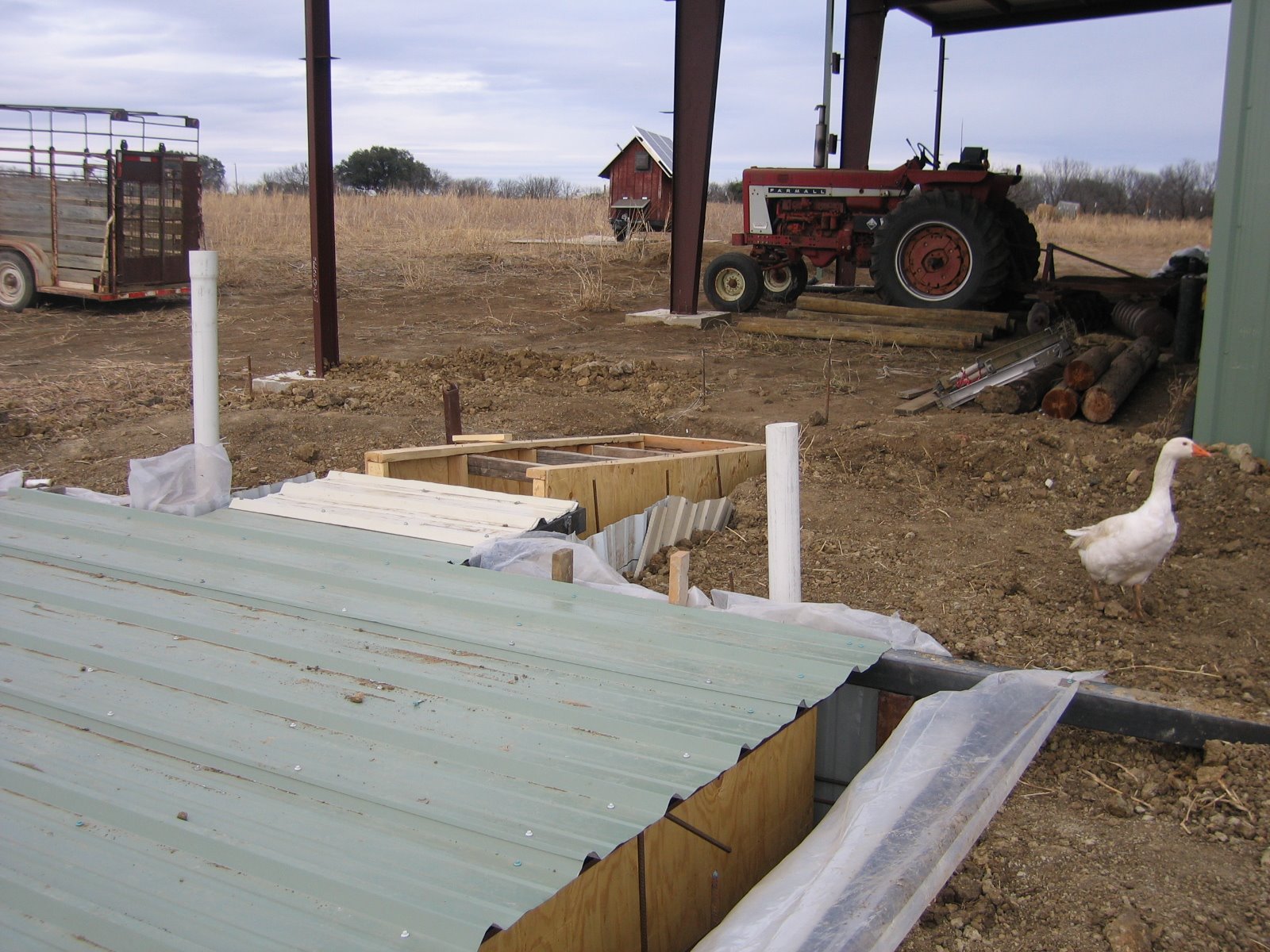
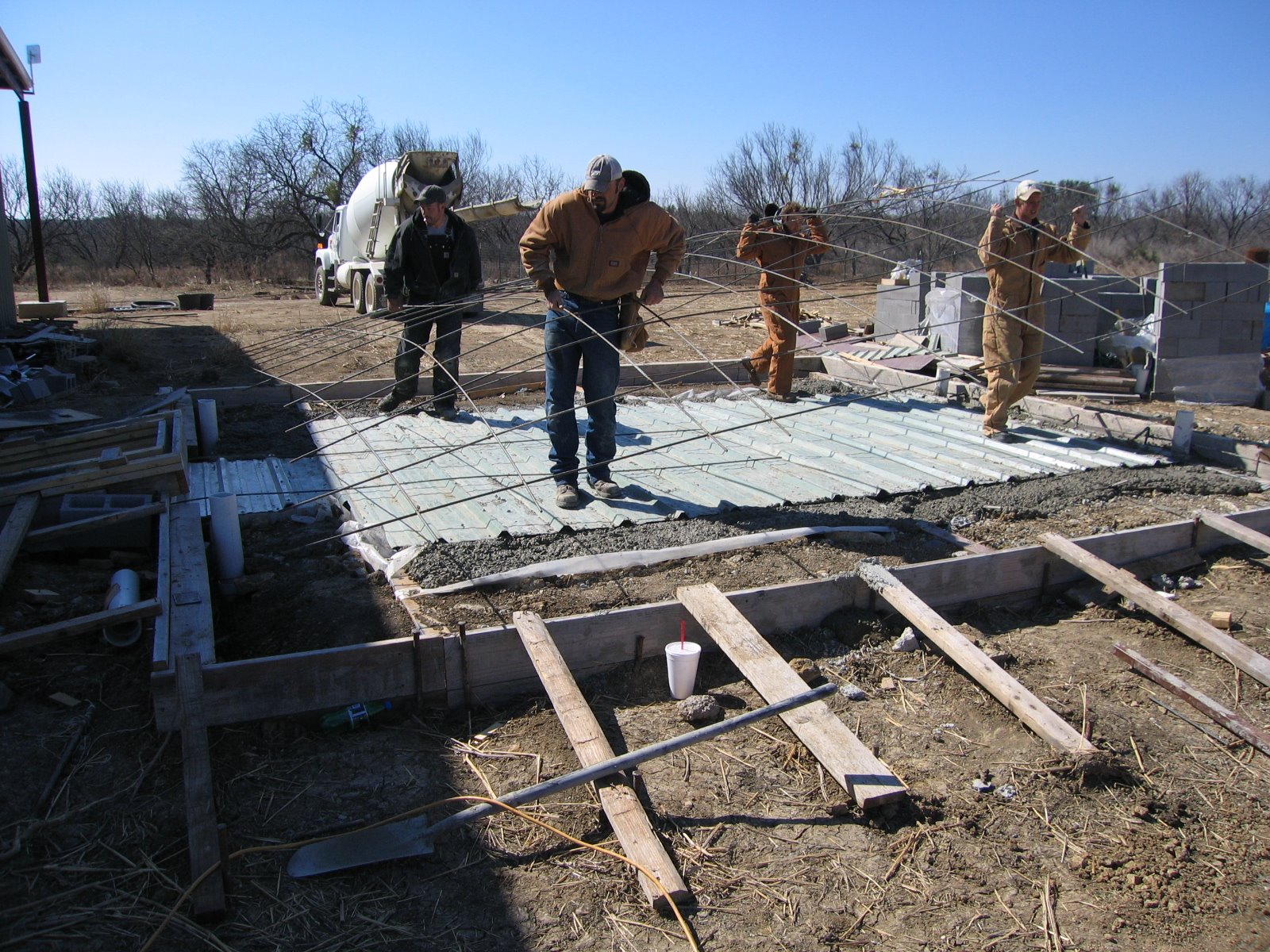
They used steel beams for support and tin to support the roof:


In researching venting, I decided to put 4 inch PVP pipe in each corner, two high, two low, in opposite ends, to hopefully achieve convection if it got too hot in the root cellar:


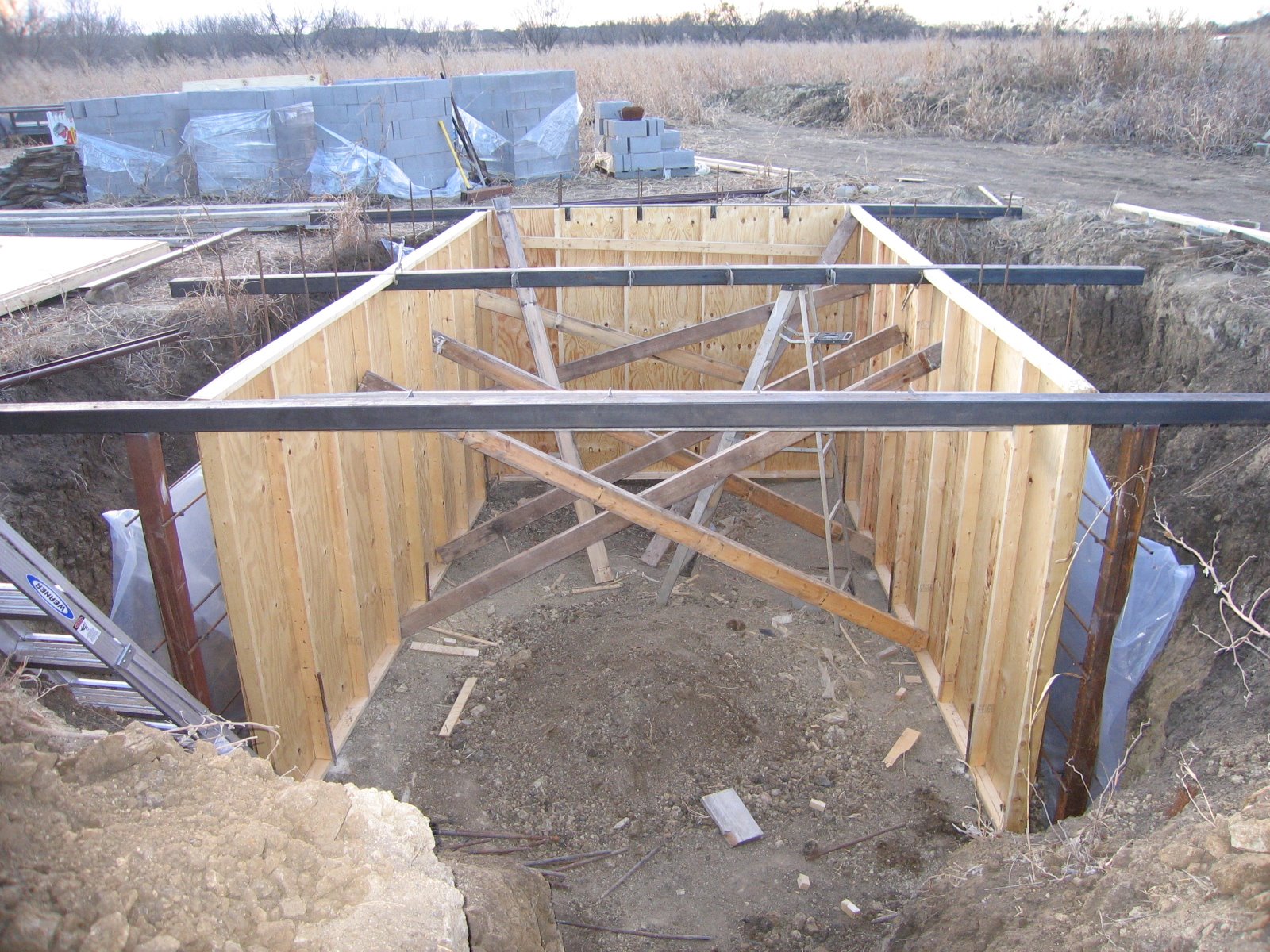
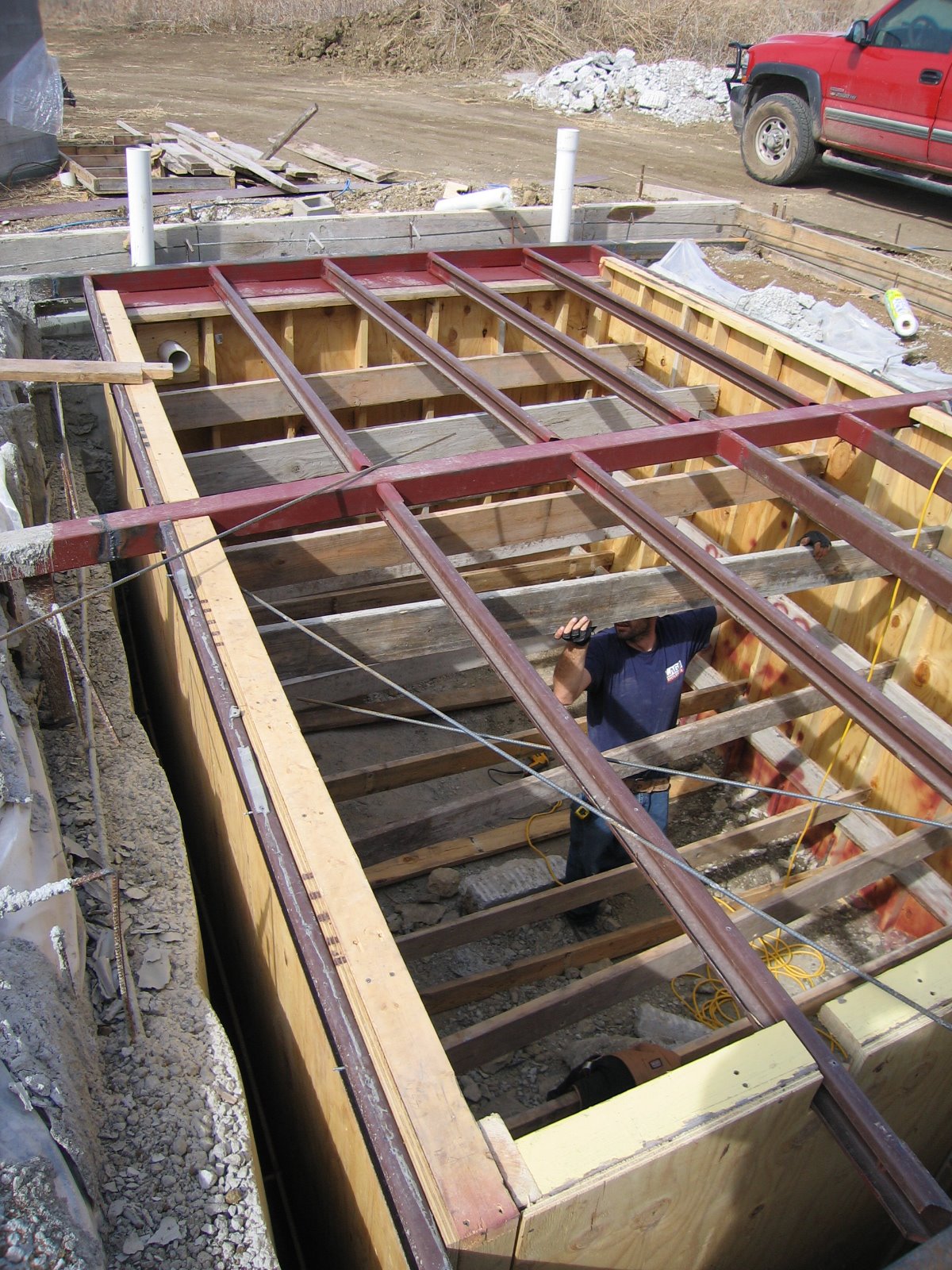
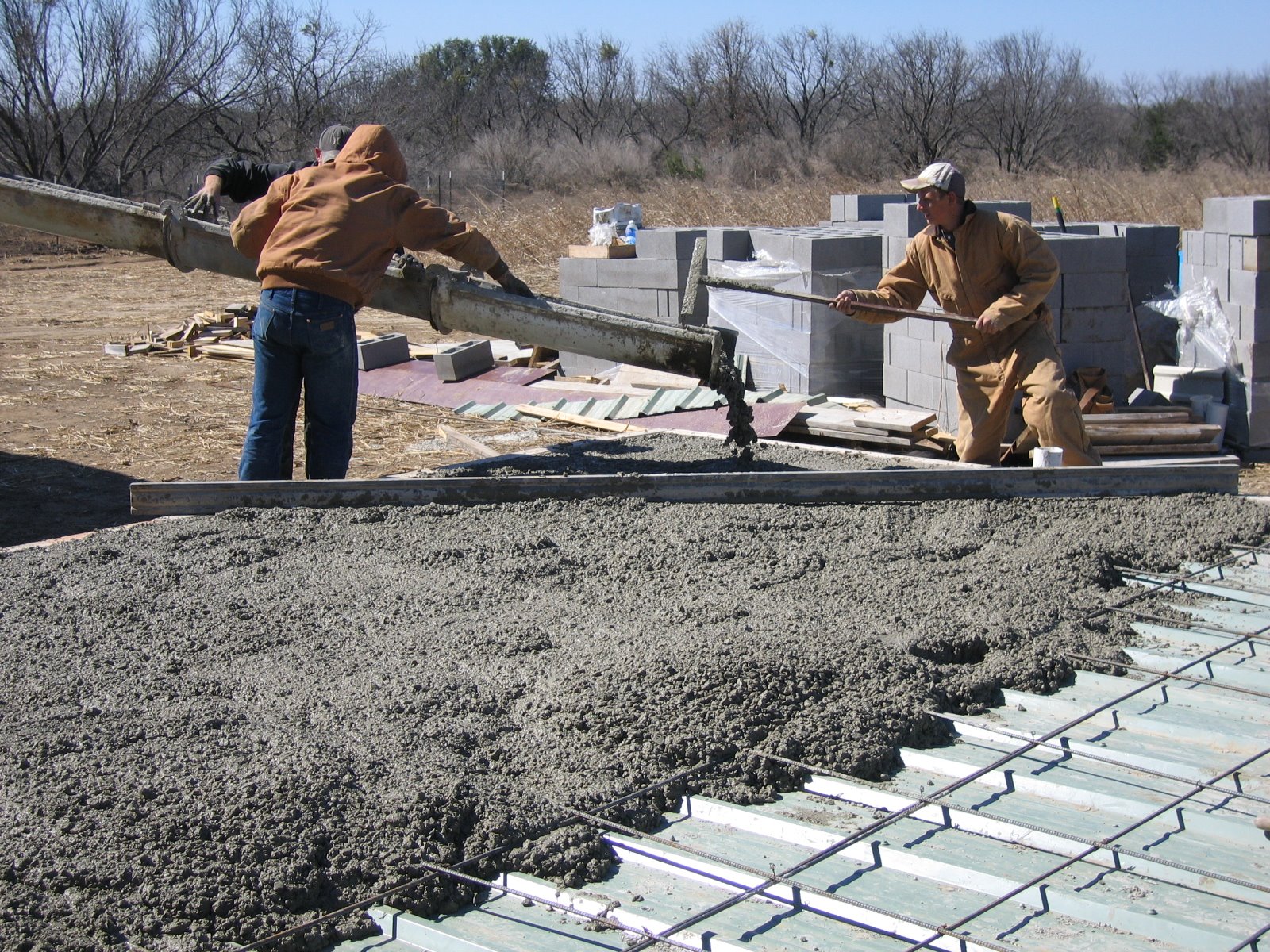
Now comes the fun! Originally, the construction crew put X-braces between the walls in the root cellar to brace for the concrete, and 2 foot studs in the wall forms. And with that, the first concrete pour didn't go so well. In fact, they had to stop part way through because the walls were coming apart. They stopped, regrouped, and re-did all of the bracing, making a grid of braces this time, and placing the studs of the wall form at 16 inches:


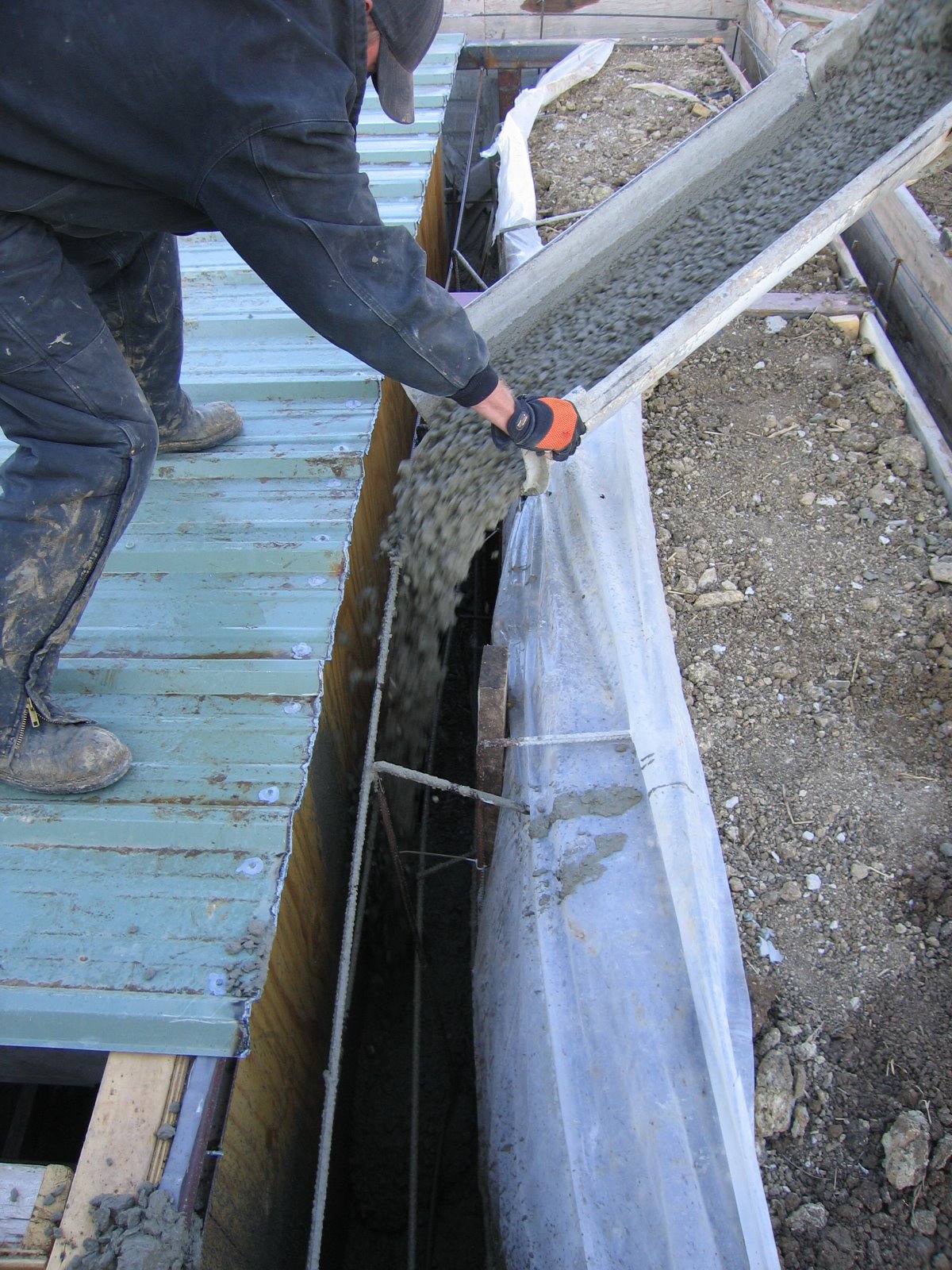
And they tried again:


And by God's graces and mercies, they were successful!


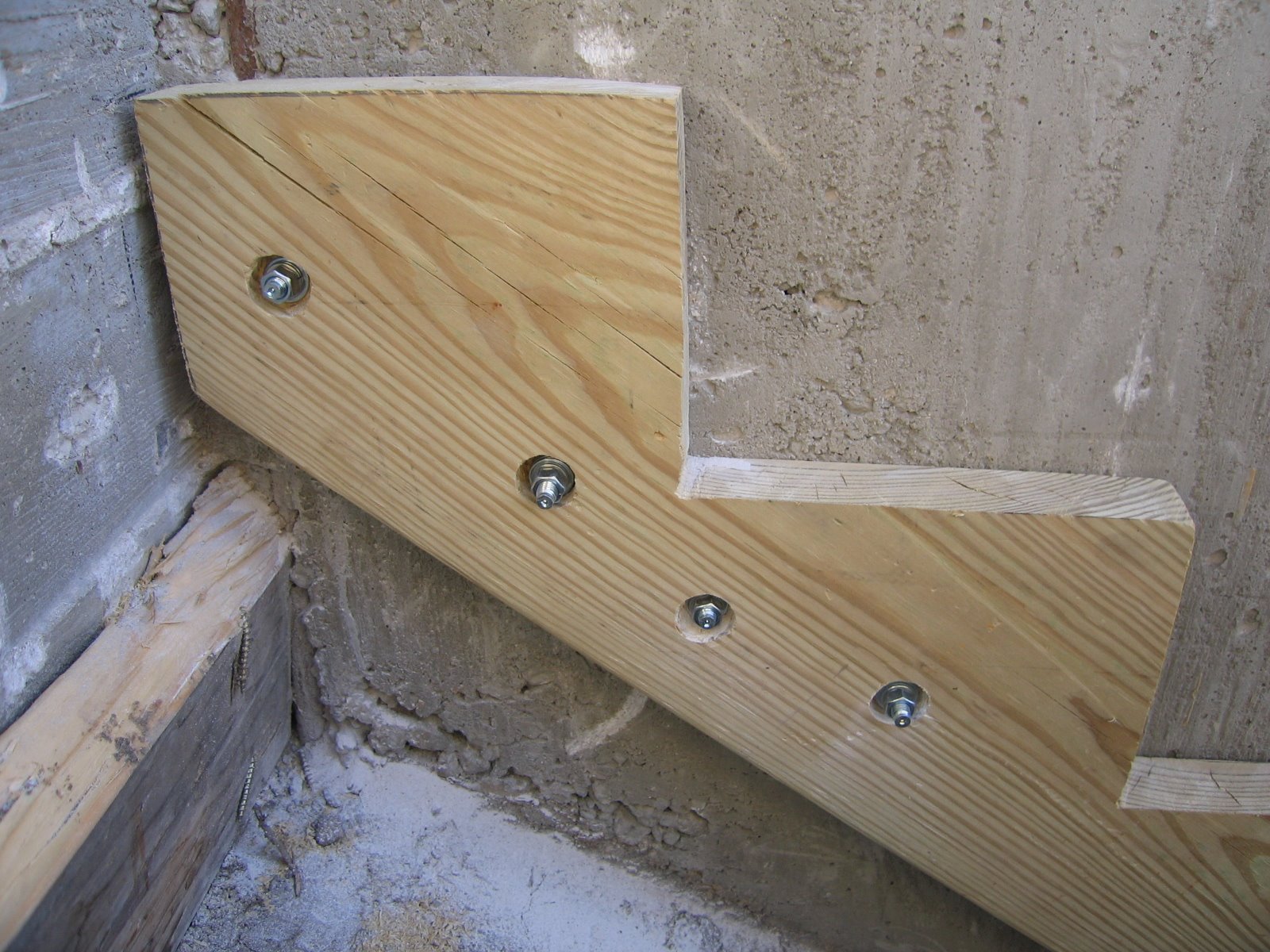
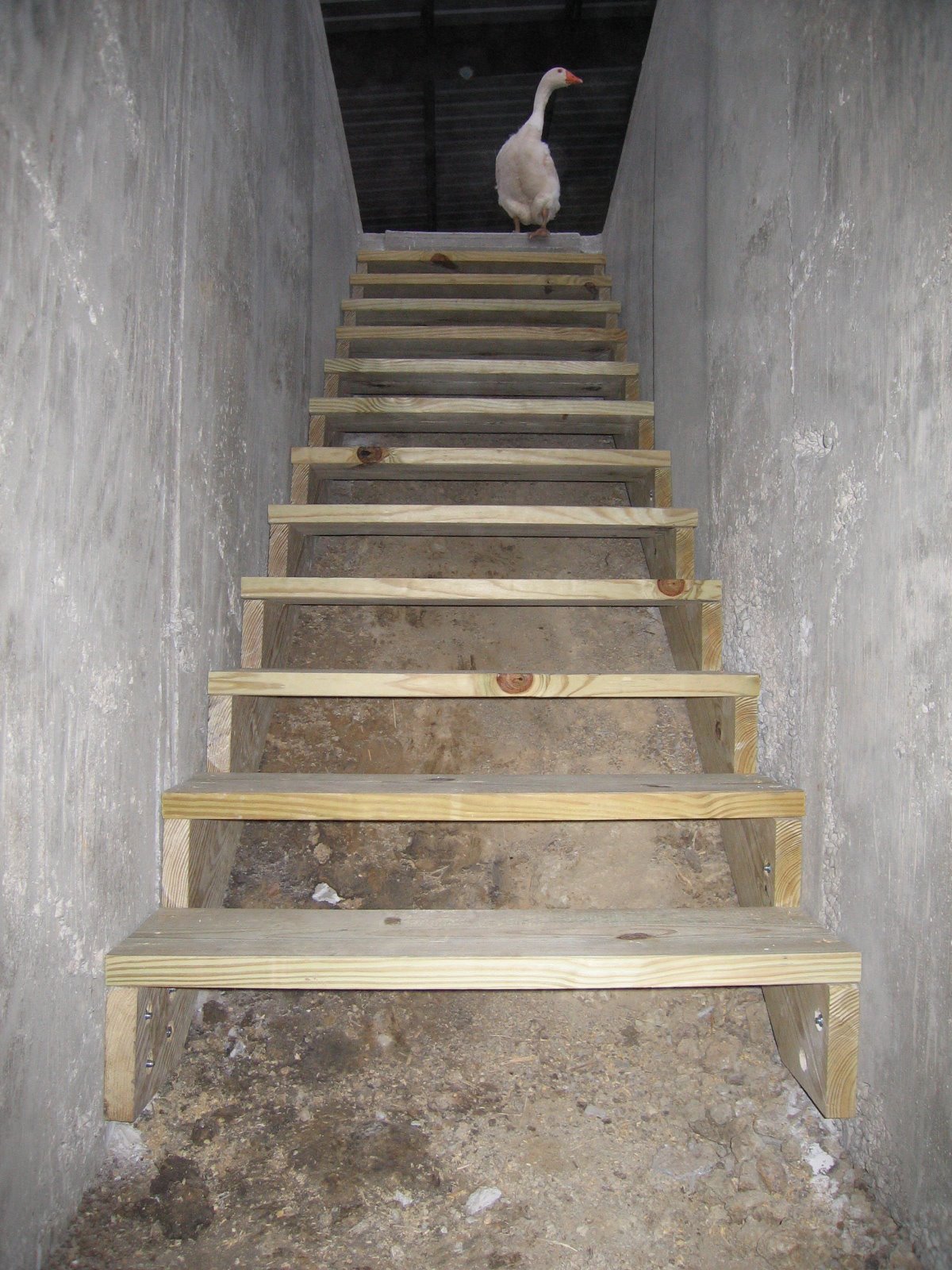
All that was left were some steps to get down:


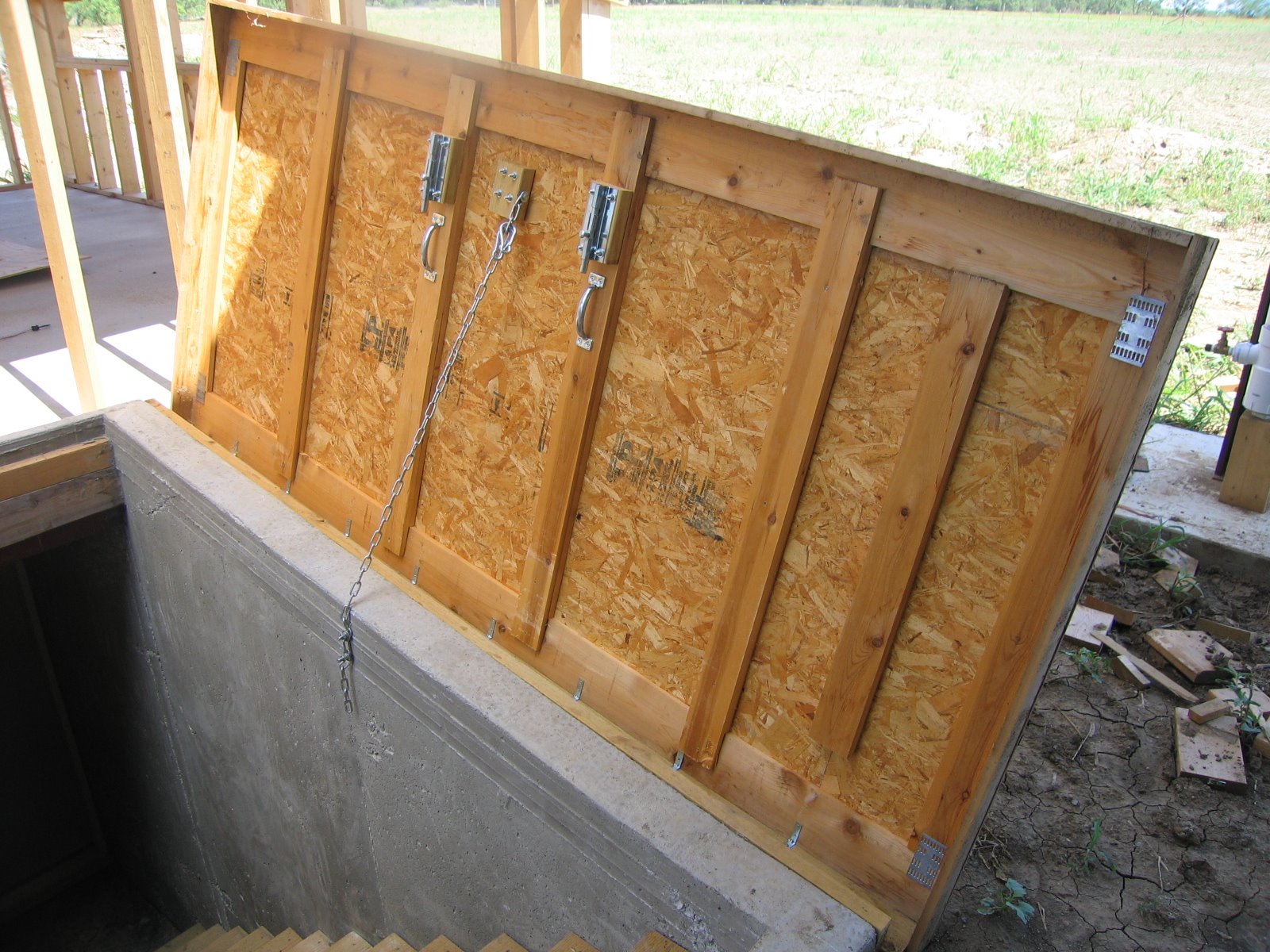
And a door:


Although this project took some 15 months to complete, we are thankful to the Lord for bringing us through the process He did, and we are grateful for the provision of the root cellar and storm shelter. May we all seek Jesus Christ and His righteousness alone as our only shelter from the storms of the wrath of God for our sin.

-- David

Labels: ,

Bookmark and Share